
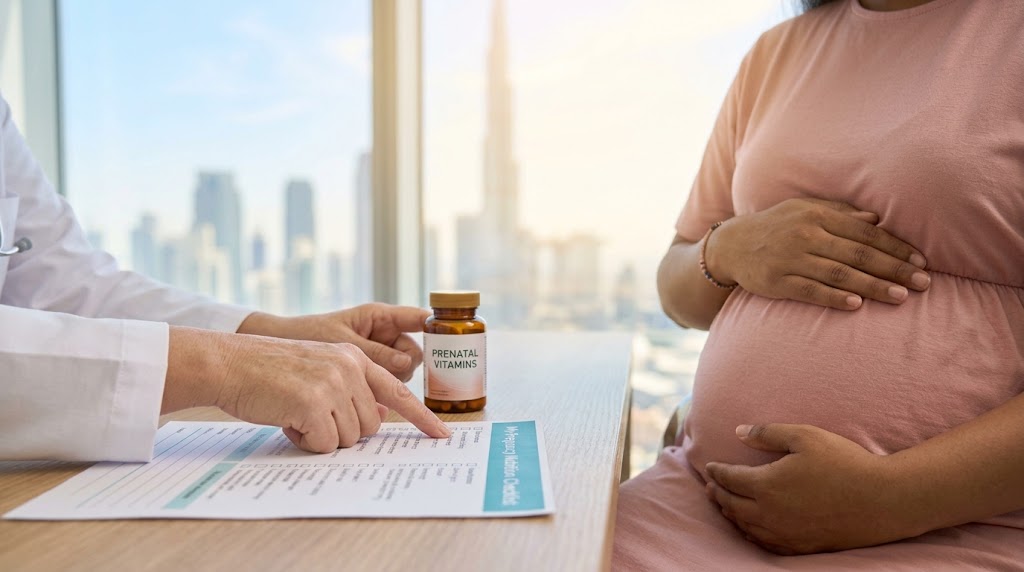
Tips to Prevent High Risk Pregnancy can help women to take initiative before they conceive and during pregnancy. By planning and keeping a close check on your pregnancy you can minimise many pregnancy problems. Simple steps, such as controlling blood pressure, ensuring blood sugar levels are under control, maintaining a healthy weight, fixing vitamins and minerals deficiencies and attending regular checkups, can help to promote a healthy pregnancy. Some risk factors can’t be altered, such as age and genes. A high risk pregnancy does not mean that there is a guarantee of complications. It does not indicate that the child will have to be treated differently or more often than is currently recommended. Women who are at high risk for pregnancy end up having healthy babies with proper health care. The following tips have been derived from trusted advice from ACOG and WHO. But each pregnancy is unique, and so, consult with your physician to identify what is best for your health and medical history.
What makes a pregnancy high risk?
A high-risk pregnancy is one where the mother, the baby or both have a higher than usual chance of running into trouble before, during or after delivery. The Merck Manual ties that to chronic illness, multiple babies and complications in earlier pregnancies.
Some women are high risk from the very first appointment. Others slide into it around the middle of pregnancy through gestational diabetes, preeclampsia or early labor.
Risk factors you can’t change
Age matters most here, with the risk climbing for women under 18 and over 35. A previous preeclampsia, preterm birth or miscarriage counts too, as do twins, genetic conditions in the family and long-term illnesses such as kidney disease, lupus or epilepsy.
Having any of these simply tells your doctor where to look first.
Risk factors you can change
This is the half worth your attention, because most tips to prevent high risk pregnancy target these factors.
Weight well above or below the healthy range matters. So does blood pressure, diabetes or thyroid disease that nobody is monitoring, along with low iron or low vitamin D (both very common here and both easy to correct).
Smoking, vaping, shisha and alcohol push the odds the wrong way. So do medicines or supplements nobody checked and prenatal visits that keep getting pushed back.
The table below shows roughly how the bigger ones play out, along with practical tips to prevent high risk pregnancy for each one.
|
Risk factor |
What can go wrong |
What helps |
|
High blood pressure |
Preeclampsia, early delivery |
Medication review before pregnancy, regular blood pressure checks |
|
Diabetes or prediabetes |
Birth defects, a very large baby |
Tight sugar control before conception, early glucose testing |
|
Excess weight |
Gestational diabetes, preeclampsia |
Gradual weight loss before pregnancy, a simple nutrition plan |
|
Smoking and shisha |
Low birth weight, preterm birth |
Quitting before you conceive |
|
Age over 35 |
Chromosomal conditions, high blood pressure |
Earlier screening, closer follow-up |
|
Anemia |
Fatigue, preterm birth |
Iron-rich food, supplements if blood tests show low iron |
Start before you get pregnant
The first of these tips to prevent tips to prevent high risk pregnancy happens before you’re pregnant at all, which is probably why so many people skip it. ACOG recommends seeing a doctor before you try to conceive so any problems get fixed while there’s still time.
About 3 months ahead works for most women. Longer makes sense if there’s a condition to sort out first.
Book a preconception visit
It feels like an ordinary checkup. Your doctor goes through your medical history, current medications, vaccines and family history, then sends you for blood tests that usually cover blood count, thyroid function and blood sugar.
A family planning consultation covers all of that in one sitting. If your cervical screening is overdue, a Pap smear test can happen at the same visit.
If thalassemia, cystic fibrosis or birth defects run in your family, it’s worth asking about genetic counseling, since the results can change how your pregnancy gets monitored. Anyone who’s been trying for a year without luck (6 months once you’re over 35) should book fertility tests rather than waiting it out.
Take folic acid early
Take 400 micrograms of folic acid a day starting at least a month before you conceive. Keep going through week 12, because it cuts the risk of neural tube defects such as spina bifida.
A few women need much more than that. After a pregnancy affected by a neural tube defect, or when taking certain epilepsy medicines, the dose can be many times higher. Your doctor should set that number rather than you guessing it.
Get chronic conditions under control
Long-term conditions drive a big share of preventable complications. They respond best when treated before pregnancy rather than during it.
Controlling them ranks among the most effective tips to prevent high risk pregnancy.
Blood pressure and heart health
Some blood pressure tablets, including ACE inhibitors and ARBs, aren’t safe in pregnancy, so your doctor may swap yours before you conceive. Don’t stop one on your own in the meantime, since uncontrolled pressure is dangerous for you and the baby.
Diabetes and thyroid disease
High blood sugar around conception raises the chance of miscarriage and birth defects. An HbA1c test shows your average sugar over roughly 3 months. Most doctors want that number close to normal before you start trying.
Thyroid problems follow a similar logic. If you already take thyroid medicine, the dose usually needs raising early in pregnancy, so call your doctor as soon as you get a positive test instead of waiting for the first scheduled visit.
Check your vaccines
Live vaccines such as MMR and chickenpox can’t be given during pregnancy, which is why your doctor checks your immunity to rubella and chickenpox first. If you need a shot, you wait about a month before trying.
Once you’re pregnant, the flu shot and the Tdap vaccine (usually between 27 and 36 weeks) protect both you and the newborn.
Everyday tips to prevent high-risk pregnancy: food, weight and vitamins
Food moves your blood sugar, your blood pressure and your baby’s growth, so the goal is steady meals.
Eat for steady blood sugar
Build meals around vegetables, lean protein, whole grains and a little olive oil or nuts. Fruit is fine. The fiber slows the sugar spike.
Dubai makes this harder than it sounds, because dates, sweet karak chai and fresh juice appear at nearly every gathering (and in most offices). One or two are fine. Several a day add up fast, particularly with gestational diabetes in the family.
A habit that works for many women is pairing carbs with protein, so rice with chicken and salad beats rice on its own.
Weight gain targets
Gaining too much raises the odds of gestational diabetes and preeclampsia, while gaining too little can slow the baby’s growth. The ranges below come from the Institute of Medicine guidelines that ACOG follows. They apply to a single baby.
|
Weight before pregnancy (BMI) |
Suggested total gain |
|
Underweight (under 18.5) |
12.5 to 18 kg |
|
Healthy (18.5 to 24.9) |
11.5 to 16 kg |
|
Overweight (25 to 29.9) |
7 to 11.5 kg |
|
Obese (30 or more) |
5 to 9 kg |
Twins have their own targets. Crash diets are a bad idea during pregnancy because they can leave you short on nutrients.
Vitamin D, iron and other supplements
Vitamin D deficiency is common across the Gulf despite all the sunshine, partly because of indoor living, air conditioning and sun-covering clothing. One blood test tells you where you stand.
Iron deserves a check too, since low iron means tiredness now and a higher chance of anemia at delivery. A decent prenatal vitamin covers the basics. Herbal products and megadoses should wait until your doctor okays them (too much vitamin A can harm the baby).
Move, sleep and manage stress
Exercise safely
Most women with an uncomplicated pregnancy can aim for about 150 minutes of moderate activity a week, which could be brisk walking, swimming or prenatal yoga. If you can still hold a conversation while you’re doing it, the pace is about right.
Some conditions change the rules. Placenta previa, a short cervix or a risk of early labor can all mean cutting back, so ask your doctor for the limits in writing.
Handle the Dubai heat
Summer here adds real overheating and dehydration risks, so walk early in the morning or loop a mall instead of heading out at midday. Drink enough that your urine stays pale yellow.
Saunas and hot tubs are best avoided, since letting your core temperature climb (especially in the first trimester) isn’t safe for the baby.
Protect your sleep and mood
Chronic stress wrecks sleep, appetite and blood pressure. Researchers still debate whether it causes complications directly. What’s clearer is that anxiety and depression can make women skip appointments, which is a problem by itself.
Tell your doctor if you’re struggling, because treatment exists and it’s safe. Around 28 weeks, most guidelines suggest sleeping on your side.
Prenatal visits that matter
Regular antenatal care catches problems while they’re still small, since high blood pressure, high sugar and slow growth all show up on routine tests, often before you feel anything. A typical low-risk schedule looks like the table below. High-risk pregnancies mean more visits.
|
Stage |
What usually happens |
|
6 to 10 weeks |
First visit, medical history, blood tests, early scan to confirm dates |
|
11 to 14 weeks |
First trimester screening, nuchal translucency scan |
|
18 to 22 weeks |
Detailed anomaly scan of the baby’s organs |
|
24 to 28 weeks |
Glucose tolerance test, anemia check |
|
28 to 36 weeks |
Visits every 2 weeks, growth checks, Tdap vaccine |
|
36 weeks to birth |
Weekly visits, baby’s position, birth plan |
An early pelvic ultrasound confirms the pregnancy is in the right place and counts the babies, which matters because twins change the whole plan.
Blood pressure and a urine check happen at every visit. It’s dull, sure, but it’s also how preeclampsia gets caught early.
What to avoid during pregnancy
Tobacco, vaping and shisha come first on the list. One shisha session exposes you to a lot of smoke, so quit before you conceive if you can. Alcohol has no proven safe amount.
Any painkiller, herbal remedy or skin treatment should go past your doctor first. Caffeine should stay under 200 mg a day, which works out to one or two small coffees.
On the food side, raw or undercooked meat, unpasteurized dairy, raw eggs and high-mercury fish like shark and swordfish are out. Someone else should also handle the cat litter, since it can carry toxoplasmosis.
Situations that need extra planning
Pregnancy after 35
Past 35 the odds of high blood pressure, gestational diabetes and chromosomal conditions go up. Most women still have healthy pregnancies. Earlier screening and closer follow-up are what make the difference.
IVF and twins
IVF can lead to twins when more than one embryo is transferred. Twins carry higher risks of preterm birth and preeclampsia. Single embryo transfer lowers that risk, so bring it up before treatment starts.
A previous complication
If you’ve had preeclampsia, a preterm birth or a loss before, tell your doctor on day one. They may suggest low-dose aspirin, usually started between 12 and 16 weeks, to lower the chance of preeclampsia. Never start aspirin on your own.
Ramadan and fasting
Fasting can dry you out and swing your blood sugar. Women with diabetes, high blood pressure or an earlier complication are generally advised not to fast. Talk to your doctor well before Ramadan.
Warning signs that need care today
Don’t wait for your next appointment if you notice any of these:
- Vaginal bleeding or fluid leaking
- A severe headache that won’t go away
- Blurred vision or flashing lights
- Sudden swelling of the face or hands
- Pain in the upper right abdomen
- Fewer baby movements than usual
- Regular contractions before 37 weeks
- Fever, chest pain or trouble breathing
Call your doctor right away. In an emergency in Dubai, call 998 or head to the nearest hospital emergency department.
After about 28 weeks, get to know your baby’s usual pattern of movement. A change is worth a call, even at 2 a.m.
Mistakes that raise risk quietly
The best tips to prevent high-risk pregnancy fall apart when a few common habits sneak in.
Waiting until week 12 for the first visit is the classic one, since early care lets you fix problems early. Stopping a long-term medicine without asking comes next. Some need switching, but few need stopping.
“Eating for two” really works out to about 300 extra calories a day in the second and third trimesters, which is a small snack. Taking five supplements at once gives you five chances for a bad interaction.
Googling instead of calling is another trap, because a forum can’t check your blood pressure. Reduced movement should get checked every time.
When to see a specialist in Dubai
A general checkup is enough for plenty of women. A specialist makes sense if you’re over 35 or under 18. The same goes if you live with diabetes, high blood pressure, thyroid disease, lupus or epilepsy, or if you’ve had a loss, a preterm birth or preeclampsia. Twins, IVF conceptions and abnormal scan or blood test results belong on that list too.
Dr. Zohreh Kazemi is an obstetrician and gynecologist who sees patients at Trusta Medical Center in Downtown Dubai. Her clinic provides high-risk pregnancy care, routine general gynecology and care through delivery and childbirth.
You can read more about the clinic before you decide.
FAQs
Can a high-risk pregnancy still end in a normal vaginal delivery?
Often, yes, though it depends on the condition. Some women need induction or a planned cesarean, and your doctor will explain why. Bring up your birth plan around 32 to 34 weeks.
Can a pregnancy become high risk halfway through?
Yes. Gestational diabetes, preeclampsia, a short cervix and slow baby growth usually show up in the second or third trimester, which is one more reason to keep every appointment.
Does PCOS automatically make my pregnancy high risk?
It depends. PCOS raises the chance of gestational diabetes, high blood pressure and miscarriage, so doctors tend to watch these pregnancies more closely. A healthy weight, steady blood sugar and early monitoring bring those risks down.
Is it safe to fly with a high-risk pregnancy?
Many airlines restrict travel after 36 weeks for one baby and earlier for twins. With a high-risk condition, get your doctor’s written okay first. On the flight, walk the aisle and drink water to lower the clot risk.
How many scans will I need?
It varies. Many high-risk pregnancies get a growth scan every 2 to 4 weeks, and your doctor sets the schedule around your condition.
Should I stop exercising if my pregnancy is labeled high risk?
It depends on the condition. Many allow light activity such as walking. Some call for rest. Ask exactly what’s allowed and get it in writing.
Final thoughts
The best tips to prevent high-risk pregnancy come down to a handful of habits. Plan before you conceive and take folic acid. Treat blood pressure, sugar and thyroid problems early. Eat steadily and move daily. Stay away from smoke and unchecked medicines. Never skip a prenatal visit.
Planning a pregnancy or already expecting? A specialist visit takes the guesswork out. Contact Dr. Zohreh Kazemi’s clinic in Downtown Dubai or call +971 54 555 0770 to book a consultation. The clinic is open daily from 9:30 am to 10:00 pm.