Why people connect birth control with fibroids
Fibroids respond to estrogen and progesterone. They contain more receptors for both hormones than normal uterine muscle does. They also tend to shrink after menopause, when those hormones drop.
So the thinking goes: pills contain hormones, so pills must feed fibroids.
That logic skips a few things. Today’s pills carry far lower hormone doses than the pills of the 1960s. A daily pill can also steady hormone levels, where an ovulating cycle swings up and down each month.
Timing adds to the confusion. Doctors often prescribe the pill for heavy periods, and heavy periods are also the most common fibroid symptom. The fibroid was growing before the first pack.
What actually changes your fibroid risk
Several factors do shift the odds:
- Age (risk rises through the reproductive years)
- Family history, such as a mother or sister with fibroids
- Race (Black women develop fibroids more often and at younger ages)
- Obesity
- Starting periods before age 10
- Low vitamin D
- High blood pressure
- A diet heavy in red meat and light on vegetables, fruit and dairy
- Alcohol
Pregnancy history belongs on that list too. Risk falls with each pregnancy, and women who’ve never been pregnant have a higher risk.
This is where family planning enters the story. The link runs through pregnancy history. Many women use birth control while they wait to have children (or choose not to), so contraception and “never pregnant” overlap a lot in the data. Researchers use careful statistics to pull the two apart.
How common contraceptive methods compare for women with fibroids
Method | What research suggests about fibroid risk | If you already have fibroids |
Combined pill | Linked with lower risk in several studies | Often eases heavy periods |
Injection (Depo-Provera) | Long-term use linked with lower risk | Bleeding pattern can change |
Hormonal IUD | Long-acting progestin methods may lower risk | Reduces heavy bleeding for many women; may not fit if a fibroid distorts the uterine cavity |
Implant | Less fibroid-specific research | Bleeding can be irregular |
Copper IUD | No hormones and no evidence linking it to fibroids | Can make periods heavier, so it may be a poor fit when fibroids already cause heavy bleeding |
Condoms | No hormonal effect | No effect on bleeding |
This table is a general guide. Your own history decides what’s right for you.
Can birth control make existing fibroids worse?
Studies disagree. Some find hormonal contraception worsens fibroid symptoms or growth. Others find it eases symptoms and slows growth.
Doctors who’ve reviewed the data say modern low-dose pills don’t appear to change fibroid growth. Many women get lighter periods on them.
Most women with fibroids do fine on hormonal methods. A few don’t respond well, especially to formulas with higher estrogen. If your symptoms get worse after you start a method, tell your doctor. Other options exist.
Is hormonal contraception safe if you have fibroids?
Generally yes. The CDC’s US Medical Eligibility Criteria rates IUD use with fibroids as category 2, which means the benefits usually outweigh the risks. A systematic review found that IUDs improved iron levels in women with fibroids. It also found a higher rate of the device slipping out.
The exception is a fibroid that distorts the uterine cavity. In that case an IUD generally can’t be placed.
That’s why a pelvic ultrasound is worth having before you choose a method. It shows where your fibroids sit and how big they are. That tells us whether an IUD will fit.
Signs you should get checked
Book a visit if you notice any of these:
- Periods that soak through a pad or tampon every hour for several hours
- Periods lasting longer than 7 days
- Pelvic pressure or pain that keeps coming back
- Needing to pee more often than usual
- Unusual tiredness or weakness
- Trouble getting pregnant or repeated pregnancy loss
Sudden sharp pelvic pain or very heavy bleeding needs care right away.
How fibroids are diagnosed and treated
Diagnosis starts with a pelvic exam and an ultrasound. An MRI helps in some cases. A blood test checks for anemia.
Treatment depends on the size and location of the fibroids, your symptoms and your plans for pregnancy. If you have no symptoms you may need no treatment at all.
Options include medicines to control bleeding and pain. Procedures can remove the fibroids themselves. Hysterectomy is reserved for severe cases where other treatments haven’t worked.
If you have symptoms, a consultation with a gynecologist is the right first step. You can read about our general gynecology care in Downtown Dubai.
Choosing a method with your gynecologist
A few habits make this conversation easier:
- Bring your history: period pattern, family history of fibroids and any past scan results.
- Ask about a pelvic ultrasound before you choose an IUD.
- Keep your current method going until you have a plan. The risk of an unplanned pregnancy starts right away.
- Track your bleeding for 2 to 3 cycles. A note on your phone works fine.
- Say so if you want a pregnancy within a year or two. Fibroid location can change the advice.
If you’d like to talk through your options, our family planning service at Trusta Medical Center is a good place to start.
So, does family planning cause fibroids? The bottom line
So, does family planning cause fibroids? The evidence says no. Several studies point to some protection from pills and long-acting progestin methods.
Family history, age, weight and pregnancy history all influence fibroid risk.
If you have fibroids or heavy periods, get a scan before you choose or change a method. Keep using protection while you decide.
Dr. Zohreh Kazemi sees patients at Trusta Medical Center in Downtown Dubai. Call +971 54 555 0770 to book a consultation.
Frequently asked questions
Can stopping birth control make fibroids grow?
No good evidence says so. The 2024 study found no consistent pattern between fibroid risk and time since last pill use. Some women notice heavier periods after stopping because the pill keeps their bleeding light. That’s the underlying cycle showing itself again.
Can fibroids affect pregnancy?
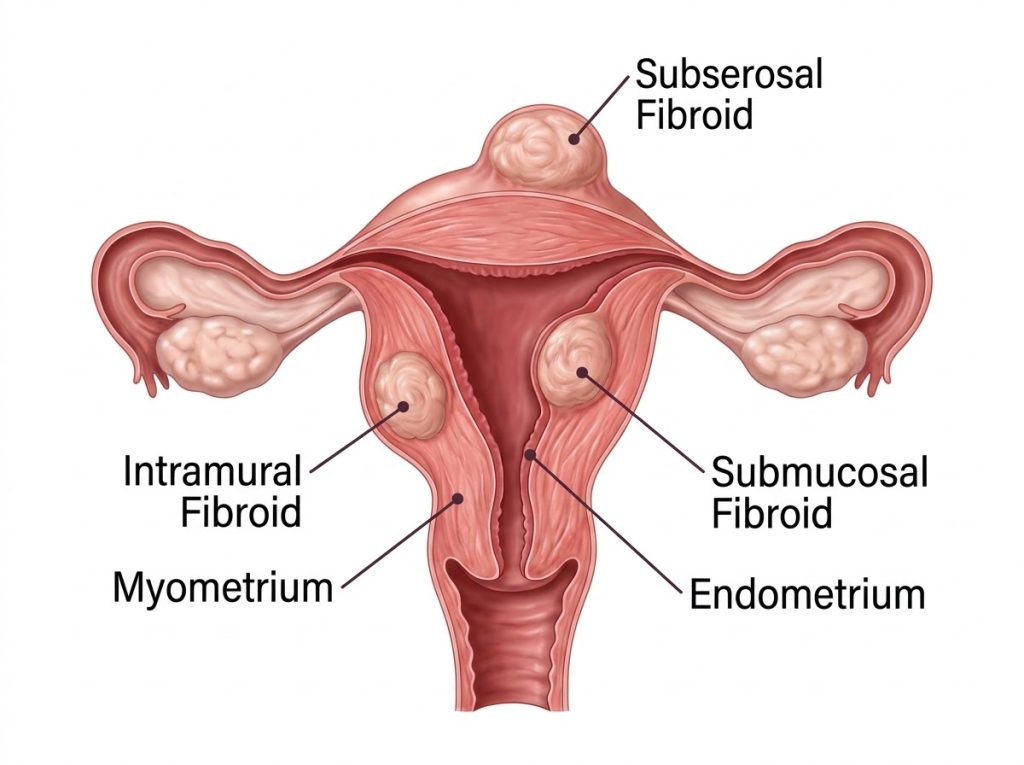
Often they don’t interfere. Some fibroids, especially submucosal ones, can cause infertility or pregnancy loss. Fibroids can also raise the chance of complications such as placental abruption. A scan before you start trying tells us where yours sit.
Do fibroids turn into cancer?
Almost never. Fibroids are benign and aren’t linked to a higher risk of other cancers of the uterus.
Will fibroids go away on their own?
Sometimes. Growth varies. Some fibroids grow slowly or quickly. Some stay the same size and some shrink without treatment. Many shrink after menopause.
Can birth control shrink fibroids?
It controls bleeding for many women. Medicines that shrink fibroids work differently, and your doctor would prescribe those separately.
Does the type of pill matter?
Doctors usually choose based on your bleeding, health history and preferences. Some favor lower-dose or progestin-only options when fibroids are a concern. No pill has been proven to cause fibroids.