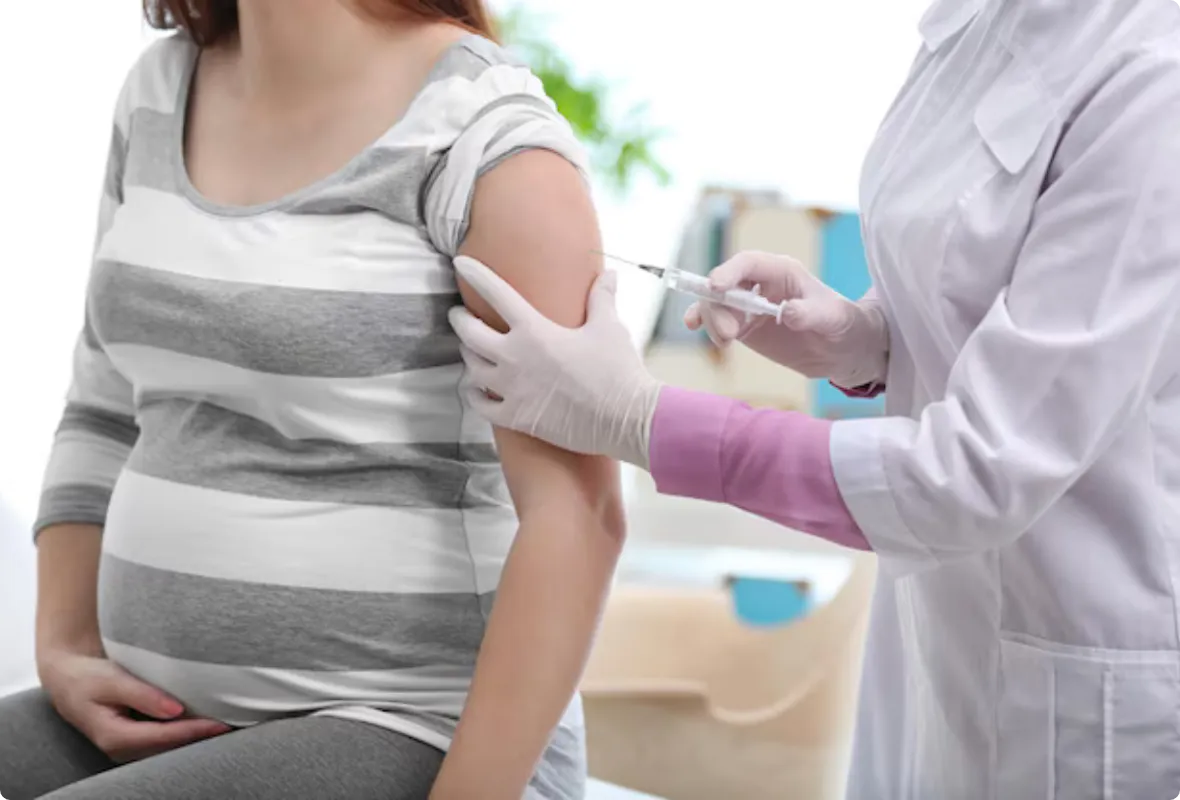
Pregnancy changes how the body handles some infections. A newborn can’t have vaccines of its own for weeks, so maternal vaccination bridges that gap. Antibodies made after a pregnancy vaccine pass across the placenta, so the baby arrives with some protection already in place.
Vaccination in pregnancy in Dubai starts with a short conversation about what’s already been given, how far along the pregnancy is and which infections matter most. Dr. Zohreh Kazemi, our obstetrician and gynecologist, then recommends the vaccines that fit and explains the timing.
Plenty of expectant mothers arrive unsure whether the last tetanus shot was five years ago or ten, or whether the flu vaccine suits the first trimester. Those are exactly the questions the appointment is for.
Why vaccination in pregnancy matters
Some infections hit harder during pregnancy. Others are far more dangerous for newborns than for adults. Whooping cough is the clearest example. A baby is too young for its own vaccine, so antibodies passed on before birth are the first line of defense.
Vaccines also protect the mother, which means fewer sick days for her and less chance of passing an infection on to the baby.
Benefits of vaccination during pregnancy
- The mother gets protection from infections that can be more serious in pregnancy
- Antibodies reach the baby before birth
- Newborns are covered during their most fragile first weeks
- Preventable infections are stopped before they start
- Fewer worries during the weeks around delivery
Vaccines during pregnancy: what’s recommended
Which vaccines make sense depends on how far along the pregnancy is, vaccine history and the season. These are the main ones.
Tdap vaccine in pregnancy
Tdap protects against tetanus, diphtheria and pertussis. Guidelines call for one dose in every pregnancy, even if Tdap was given recently, ideally between 27 and 36 weeks. The CDC’s vaccination guidelines list this timing for each pregnancy.
Whooping cough vaccine in pregnancy
Pertussis, known as whooping cough, can be dangerous for infants. Getting Tdap while pregnant lets antibodies cross the placenta. AAFP notes the mother’s response peaks about two weeks after the shot, which is why earlier in the 27 to 36 week window works well.
Missed it? Tdap can go ahead right after delivery for a mother who hasn’t had it.
Tetanus vaccine in pregnancy
Tetanus is a serious bacterial infection. Tdap covers it, so a separate tetanus shot usually isn’t needed. Our doctor checks the immunization record and decides whether anything else is due.
Flu vaccine in pregnancy
Guidelines recommend the inactivated flu shot for anyone who is pregnant during flu season, in any trimester. They advise against the nasal spray flu vaccine because it contains live virus. A flu shot during pregnancy also gives the newborn some protection in the first months.
RSV vaccine in pregnancy
RSV is a common cause of breathing trouble in young babies. ACOG puts the Abrysvo vaccine at 32 to 36 weeks of pregnancy in the RSV season. If the mother isn’t vaccinated, the baby can receive an antibody after birth. Our doctor explains which route fits and when.
COVID vaccine in pregnancy
Current guidance allows a COVID-19 vaccine in any trimester. Recommendations shift with the season and variants, so our doctor reviews the latest advice and vaccine history at the visit.
Pregnancy vaccination schedule: when is each vaccine given?
Timing matters because antibodies need a couple of weeks to build and cross to the baby.
Vaccine | Usual timing | Why it matters |
|---|---|---|
Tdap | 27 to 36 weeks, every pregnancy | Protects the newborn from whooping cough |
Flu shot | Any trimester, during flu season | Protects mother and newborn |
RSV (Abrysvo) | 32 to 36 weeks, in RSV season | Protects the baby from severe RSV |
COVID-19 | Any trimester, per current guidance | Protects the mother from severe illness |
Several can happen at the same visit. Our doctor tells you which ones and in what order.

Vaccines to avoid in pregnancy
Doctors avoid live vaccines in pregnancy, including MMR, chickenpox and the nasal spray flu vaccine, because of a theoretical risk to the baby. Anyone who receives one by mistake can relax a little, since none has been proven to harm an unborn baby, according to Children’s Hospital of Philadelphia.
Planning a pregnancy? Get the MMR and chickenpox vaccines first, then wait four weeks before trying to conceive. A rubella immunity test before pregnancy shows which shots are needed. Preconception care helps plan the rest.
Is vaccination in pregnancy safe?
Vaccines recommended in pregnancy, mainly Tdap and the inactivated flu shot, have a long track record. Doctors hold back live vaccines. Our doctor checks vaccine history, stage of pregnancy, medical background and infection risk before any shot.
Side effects of pregnancy vaccines
Reactions to recommended vaccines are usually mild and short-lived:
- Pain or soreness where the needle went in
- Mild swelling
- Headache
- Fatigue
- A low fever
Our doctor explains what to expect and which symptoms deserve a call.
Risks of vaccination during pregnancy
Safety depends on the specific vaccine and the person, with live vaccines as the main exception. Leaving a preventable infection unprotected carries its own risk. Our doctor weighs both sides before recommending anything.
Who needs vaccination during pregnancy?
Every pregnancy deserves a vaccine review. It matters most with:
- An unclear or incomplete vaccine history
- Gaps in earlier immunizations
- Pregnancy during flu or RSV season
- A health condition that raises infection risk
- Travel plans
- Known exposure to an infection
Pregnancy with extra medical factors may call for high-risk pregnancy care, where vaccines are one part of closer monitoring.
Protecting the baby after birth
Maternal vaccination gives early protection before the baby’s own schedule begins. It doesn’t replace the routine childhood vaccines that start after birth.
Some vaccines work better after delivery. The mother can get Tdap straight after birth if it was missed. Our delivery and childbirth care covers what happens around the birth.
What the vaccination assessment includes
Dr. Zohreh Kazemi recommends vaccines based on pregnancy stage, medical history and what’s already been given. The assessment covers:
- Medical history
- Vaccination history
- Stage of pregnancy
- Possible infections
- Vaccine timing
- Follow-up advice
Regular antenatal care visits are a natural time to line up each dose.
Pregnancy vaccination in Dubai
A pregnancy vaccination clinic in Dubai should be able to answer three things clearly: which vaccines are needed, when to take them and what to do afterwards. Our clinic in Downtown Dubai is open every day, 9:30 am to 10:00 pm.
Already vaccinated and unsure what’s still due? Bring the immunization card. Planning another pregnancy? A family planning visit before conceiving is a good time to review it.
Book a vaccination in pregnancy appointment
Need pregnancy vaccines in Dubai? Book a consultation or call +971 54 555 0770. Bring any vaccine records and mention the due date.
FAQs
Which vaccines are recommended during pregnancy?
Guidelines recommend Tdap and the inactivated flu shot for most pregnancies. Doctors add RSV and COVID-19 vaccines depending on season and guidance.
When should I get the Tdap vaccine in pregnancy?
Between 27 and 36 weeks of each pregnancy, preferably earlier in that window.
Is the flu vaccine safe during pregnancy?
Guidelines recommend the inactivated flu shot in pregnancy. They advise against the nasal spray version because it contains live virus.
Does Tdap protect my baby?
Antibodies pass to the baby before birth and protect against whooping cough in the first weeks of life.
Does Tdap protect my baby?
Antibodies pass to the baby before birth and protect against whooping cough in the first weeks of life.
Are all vaccines safe during pregnancy?
Doctors avoid live vaccines such as MMR and chickenpox. Most other recommended vaccines go ahead as advised.