
When maternal health, fetal health, or pregnancy-related complications require extra care, doctors classify the pregnancy as high risk. Dr. Zohreh Kazemi provides high risk pregnancy services in Dubai, designed to evaluate the risks involved in your pregnancy.
The earlier a high risk pregnancy is diagnosed, the quicker the problems requiring medical supervision will be detected. If you have concerns about your pregnancy, schedule an appointment with Dr. Zohreh Kazemi at her clinic in Downtown Dubai.
What is a high risk pregnancy?
A high risk pregnancy is one in which there is a high chance of complications for the mother, the baby or both. This does not mean that complications will definitely occur. It means the chance is greater, so more precautions are needed.
Medical conditions of the prospective mother and her previous pregnancy or delivery history may indicate that a pregnancy will be high risk. Other pregnancy conditions may cause a low risk pregnancy to be classified as high risk.
Risk factors for a high risk pregnancy
Some factors lead to increased surveillance of a pregnancy.
Maternal medical conditions
Women with diabetes, chronic hypertension, renal disease, cardiac disease, thyroid conditions or certain autoimmune conditions may require special attention during pregnancy.
Previous obstetric history
Women with a history of preeclampsia, stillbirth, miscarriage or other obstetric complications may require special attention in later pregnancies.
Multiple gestation
Women carrying multiple pregnancies, such as twins or triplets, are at increased risk for several complications and require more frequent prenatal care.
Fetal abnormalities
Abnormalities found on prenatal tests, such as ultrasound or lab work, may require additional testing, genetic counseling and the involvement of a Maternal-Fetal Medicine specialist.
High risk pregnancy symptoms and warning signs
Symptoms of a high risk pregnancy aren’t always obvious. Often, medical professionals find the risk by reviewing a patient’s medical history. Regular prenatal checkups and tests can also help determine risk.
Symptoms that require immediate evaluation:
- Vaginal bleeding
- Abdominal or stomach pain
- Changes in vision
- Unusual swelling of the face, hands or feet
Preeclampsia warning signs include intense headaches, vision impairment, abdominal pain and abnormal swelling. If you experience these signs, seek immediate medical care. The NHS guide to pre-eclampsia explains the condition in more detail.
Dr. Zohreh Kazemi is a high risk pregnancy doctor in Dubai. She evaluates the patient’s risk factors and their impact on the patient and her unborn child. This includes reviewing past and present pregnancies, medication use and other factors.
Following the review, she manages the pregnancy by changing the testing frequency, the type of tests or the care provider. If your pregnancy needs extra planning, she also discusses the timing and method of delivery with you. You can read more about delivery and childbirth at the clinic.

High risk pregnancy specialist in Dubai
Your diagnosis decides which specialist you see. Depending on your needs, that can be an obstetrician, a maternal fetal medicine specialist (also called a perinatologist) or another medical specialist.
Dr. Zohreh Kazemi coordinates your care based on your diagnosis and how closely you need monitoring.
High risk pregnancy monitoring and tests
Monitoring tracks changes in your health and your baby’s health from your first visit until delivery.
Depending on your situation, it can include:
- Blood pressure checks
- Urine tests
- Blood tests
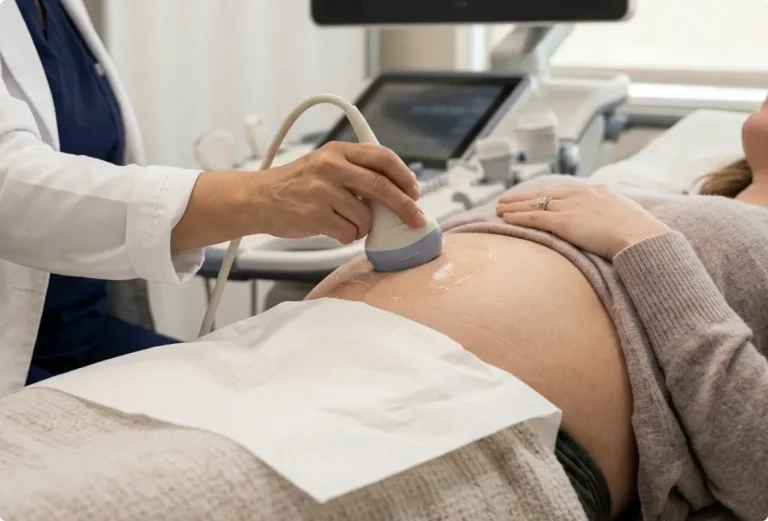
- Ultrasound and fetal growth scans
- Fetal heart rate monitoring
- Glucose testing for gestational diabetes
- Genetic counseling and prenatal testing
- Other specialist tests
How often you’re tested depends on your risk factors. You’ll need closer follow-up if you have diabetes, high blood pressure or complications from a previous pregnancy.
High risk pregnancy treatment and management
Treatment depends on your condition and how the pregnancy is progressing.
Management can include:
- Medication for maternal conditions
- Closer antenatal care and surveillance
- Extra ultrasound scans
- Monitoring of your baby’s growth and heart rate
- Consultation with specialists
- Management of complications such as preeclampsia or preterm labor
- Delivery planning
Preeclampsia is a good example. The doctor first checks how severe it is, then decides on medication, monitoring and the timing of delivery.
High risk pregnancy care: what to expect
1. Medical assessment
Dr. Zohreh Kazemi reviews your medical history, previous pregnancies, symptoms, medication and any existing health conditions.
2. Pregnancy risk assessment
She identifies your risk factors and decides whether you need extra tests or closer monitoring.
3. Pregnancy monitoring
Monitoring can include clinical checks, ultrasounds, lab tests and fetal monitoring when needed.
4. Ongoing management
She reviews your care throughout the pregnancy, especially if new symptoms, test results or complications appear.
5. Labour and delivery planning
If your pregnancy needs extra planning, you’ll discuss the timing and method of delivery.
High risk pregnancy care by stage
First trimester
An early scan and a full history review help your doctor spot existing medical problems and past pregnancy risks. If you’re pregnant after 35 or after IVF, this visit sets your monitoring plan.
Second trimester
Care centers on ultrasound and fetal growth scans, screening tests and maternal checkups.
Third trimester
Care focuses on your health, your baby’s growth and movement, blood pressure and preparing for childbirth. Your doctor also watches for signs of preterm labor. Tell the clinic immediately if you notice reduced fetal movement.
When is high risk pregnancy care needed?
You may need high risk pregnancy care if you have:
- An underlying condition such as diabetes or heart disease
- Complications in a previous pregnancy
- Recurrent miscarriage or a previous preterm birth
- A twin or other multiple pregnancy
- Gestational diabetes or pregnancy-induced hypertension
- A pregnancy after 35 or an IVF pregnancy
- An abnormal prenatal test or concerns about your baby’s growth
- A placenta problem such as placenta previa
A pregnancy can also become high risk when a new maternal or fetal complication appears. If you’re planning another pregnancy after a complication, pregnancy planning before you conceive helps you and your doctor prepare.
Is high risk pregnancy care safe?
High risk pregnancy care aims to catch problems early and track your health and your baby’s health throughout the pregnancy. How intensive your care is depends on your condition, your test results and the monitoring you need.
Dr. Zohreh Kazemi reviews your results and decides on next steps, investigations and specialist referrals.
High risk pregnancy care cost in Dubai
The cost depends on how complex your pregnancy is, how many consultations you need and which tests, ultrasound scans and monitoring you have.
At your consultation, Dr. Zohreh Kazemi assesses your pregnancy and explains which tests and monitoring you’ll need. That sets the total cost for the whole pregnancy.
For an accurate estimate, contact the clinic and describe your pregnancy. Check with your insurance provider about coverage for scans and tests too.
Factors that affect the cost
- Initial consultation and assessment by an obstetrician
- Number and type of follow-up consultations
- Blood and urine tests
- Ultrasound scans and fetal monitoring
- Extra prenatal or genetic tests
- Specialist consultations
- Treatment for related maternal or pregnancy conditions
- Monitoring at different stages of pregnancy
Why choose Dr. Zohreh Kazemi for high risk pregnancy care in Dubai?
Dr. Zohreh Kazemi starts with a careful assessment and keeps monitoring you through the whole pregnancy.
Pregnancy assessment
She reviews your medical history, pregnancy history, symptoms and signs before she builds your care plan.
Monitoring that fits your risks
Your monitoring plan follows your own risk factors.
Clear medical guidance
She explains your findings, test results and follow-up plan to you.
Ongoing care
She reassesses your care whenever something changes for you or your baby.
Book a high risk pregnancy consultation in Dubai
High risk pregnancy care needs timely assessment, the right monitoring and a plan built around your pregnancy.
Book a consultation with Dr. Zohreh Kazemi in Downtown Dubai to discuss your risk factors, monitoring needs and next steps in antenatal care. You can also call +971 54 555 0770.
FAQs
What determines a high-risk pregnancy?
A high-risk pregnancy is one in which the mother and/or fetus is/are at risk for complications.
What increases pregnancy risks?
Risks are increased by diabetes and high blood pressure, previous pregnancy complications, pregnant with more than one child, certain health conditions of the mother, and certain abnormalities of the fetus.
Is the development of complications of a pregnancy inevitable if that pregnancy is deemed high-risk?
No. Complications may not occur, but pregnancy is closely and regularly monarded.
What should I expect during high-risk pregnancy monitoring?
There will be frequent preganancy visits, and tests will be performed on the mother and the fetus. Ultrasounds will be performed, and the fetus will be monitored for well-being.
When should I seek care from a high-risk pregnancy specialist?
A high-risk pregnancy condition exists when the expectant mother has existing conditions that, in combination with pregnancy, increase the need for special and more careful obstetrical attention.