
Spotting a year after your periods stopped? Periods at 47 that suddenly soak through a pad every hour? Bleeding changes like this worry most women, and late-night searching rarely helps. Many put off asking for months because they fear what a test might find, or they’ve heard it hurts.
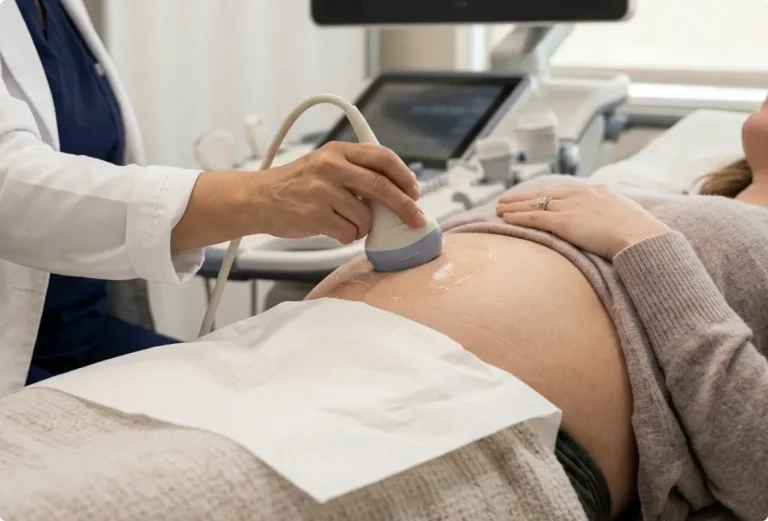
An endometrial biopsy with Dr. Zohreh Kazemi in Dubai is usually much easier than people expect. She takes a tiny sample of your womb lining and sends it to the lab. A week or two later, you have a real answer instead of a list of maybes. You stay awake throughout, it takes about 15 minutes, and most women go back to work or pick up the kids afterwards. Before that, she’ll usually want a pelvic scan and a proper chat about your bleeding to make sure it’s the right test.
Benefits of an Endometrial Biopsy
- Discovering the cause of the bleeding: the test results may show a thickened lining, signs of inflammation or something else that finally explains it.
- Detecting potential cancers: the laboratory is able to discover endometrial hyperplasia, a thickened lining that may lead to cancer development if left untreated.
- Relief: it provides reassurance when the test results are normal because the relief itself often compensates for going to the clinic.
- General anesthesia is not required: you remain conscious during the procedure, and the sampling takes less than one minute.
- Deciding on the further actions: as a consequence, Dr. Kazemi can make the decision whether the treatment with hormones, coils, further tests or check-up after a certain period of time is necessary.
- Hints for fertility: sometimes the inflammation of the lining that prevents embryo implantation is discovered in a woman’s sample.
What Is an Endometrial Biopsy?
The endometrium is just the medical name for the lining inside your womb, the part that builds up each month and comes away as your period. An endometrial biopsy takes a small strip of that lining so a pathologist can look at it under a microscope. You might see it called a uterine biopsy or an endometrial tissue biopsy on a referral letter too, but it’s the same thing.
Most clinics use something called a pipelle for it. It’s a thin, bendy plastic tube, only about 3 mm wide, and it pulls the sample out with gentle suction, much like sipping through a very skinny straw.
When Does Dr. Kazemi Recommend an Endometrial Biopsy?
Usually it comes down to bleeding that isn’t normal for you. Dr. Kazemi tends to suggest a biopsy sooner if you’re over 45, if a scan shows your womb lining is thicker than it should be, or if you’ve already tried treatment and the bleeding still hasn’t settled.
It’s worth bringing up if you’ve had:
- Any bleeding at all after menopause
- Heavy or irregular periods after age 45
- Bleeding between periods or after sex that keeps coming back
- A thickened womb lining on a scan
- Unexpected bleeding while on HRT
- Heavy bleeding that treatment hasn’t fixed
- Long gaps between periods linked to PCOS
- Failed IVF cycles, when she wants to rule out inflammation of the lining
Endometrial Biopsy Test for Abnormal Bleeding
Try not to panic about the word biopsy. Plenty of women with abnormal bleeding turn out to have something harmless, like a hormone imbalance, a polyp or fibroids. The trouble is that nobody can tell which one it is from symptoms alone, and that’s especially true after menopause.
So the endometrial biopsy test is there to settle it. Dr. Kazemi puts the result together with your scan and history, and then she can tell you if you need treatment, a hysteroscopy (where a thin camera looks inside the womb) or simply another check in a few months.
Endometrial Biopsy Procedure
Half the nerves come from not knowing what’s coming. So this is roughly how the endometrial biopsy procedure goes.
Before the Procedure
If you’re still having periods, she’ll usually book you in for just after your period finishes, and you might need a quick pregnancy test on the day. Take ibuprofen or paracetamol about an hour before if you can normally take them, since they really do take the edge off the cramping. Eat as normal, and pop a panty liner in your bag for afterwards.
During the Procedure
You lie on the couch the same way you would for a smear. Dr. Kazemi puts in a speculum, cleans the cervix, then slides the pipelle through into the womb and moves it gently a few times to collect the sample. Then it comes out, and that’s it.
After the Procedure
Expect some cramping and light spotting for a day or two. Most women go straight back to work. She’ll ask you to avoid tampons and sex for two or three days, though, because that cuts the risk of infection.

Endometrial Biopsy Pain
Endometrial biopsy pain really does vary from woman to woman. For most, it feels like a strong period cramp while the pipelle is inside, and it fades a few minutes after it comes out.
Things can feel worse if your cervix is tight, which is common after menopause or if you’ve never had a vaginal birth. If you’re nervous, just tell Dr. Kazemi before she starts. She can numb the cervix with local anaesthetic, take it slowly and stop straight away if you ask her to.
Ring the clinic if you get heavy bleeding, a temperature, pain that’s getting worse rather than better, or discharge that smells bad. That’s rare, but it can mean an infection.
Endometrial Tissue Biopsy Results
Results from an endometrial tissue biopsy normally take one to two weeks to come back. When they do, Dr. Kazemi goes through them with you properly, not in a rushed two-line phone call.
A normal result usually means hormone changes are behind the bleeding. If it shows hyperplasia, that tends to respond well to progestogen treatment, often through a hormonal coil. Sometimes the sample doesn’t have enough tissue in it, or the result isn’t clear, and then she might suggest a hysteroscopy. Rarely, it shows cancer cells, and in that case she refers you on quickly for specialist treatment.
Uterine Biopsy for Fertility and Menopause Concerns
Bleeding isn’t the only reason for a uterine biopsy. If you’ve had a few IVF cycles fail, for example, Dr. Kazemi may take a sample to look for chronic endometritis, a low-level inflammation of the lining that can make it harder for an embryo to settle in.
After menopause, it’s a different story. Any bleeding at all at that stage needs looking at, and women on HRT who get bleeding they didn’t expect may need a sample as well.
Endometrial Biopsy in Dubai
Dr. Kazemi does endometrial biopsy in Dubai as a clinic procedure, so there’s no hospital stay and no general anaesthetic.
She’ll always talk through how your bleeding has changed and look at any scans first. That way you only have a biopsy if it’s actually going to tell her something.
Why Choose Dr. Zohreh Kazemi Endometrial Biopsy ?
- Scanned prior to biopsy: she will scan your womb lining using ultrasound first, so that you do not have a biopsy unnecessarily.
- Pain relief on request: local anaesthetic in your cervix and gentle technique ensure minimal pain.
- Done in one day, out-patient: there is no admission or general anaesthesia and most women feel well enough to go home a few hours later.
- Discussion of results face-to-face: you discuss the pathology report with her in person and know what to expect next.
- Arranged follow-up if necessary: if you require treatment such as a coil or hysteroscopy, she will arrange and see you after it.
Take the Next Step Towards Answers About Your Bleeding
Any bleeding after menopause, or periods that have changed and won’t settle, is worth checking rather than living with the worry. An endometrial biopsy is quick, and in most cases it gives you a proper answer.
To book an endometrial biopsy consultation with Dr. Zohreh Kazemi in Dubai, just call the clinic and mention your bleeding when you ring.
FAQs
How painful is an endometrial biopsy?
Most women feel a sharp, period-type cramp for under a minute. A dull ache can follow for a few hours. Painkillers beforehand or local anaesthetic can help.
How long does an endometrial biopsy procedure take?
Sampling takes under a minute. With the speculum, discussion and recovery, the visit lasts about 15 minutes, without sedation.
Is an endometrial biopsy test the same as a smear test?
No. A smear checks cervical cells for HPV-related changes. A biopsy samples the womb lining to investigate abnormal bleeding or thickening.
When will I get my endometrial tissue biopsy results?
Usually within one to two weeks. Dr. Kazemi then talks you through the report.
Can I go back to work after a uterine biopsy?
Yes, most return the same day. Avoid tampons and sex for two to three days.