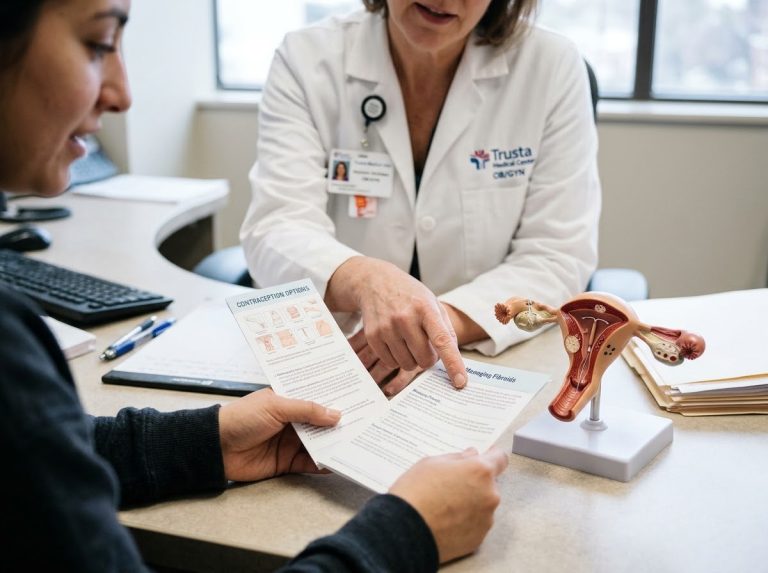
Some women first notice it on the treadmill. Others notice it when they sneeze at their desk. However, once it starts, bladder leakage soon becomes something you think about all day. Dr. Zohreh Kazemi provides stress urinary incontinence treatment in Dubai, starting with a private assessment of your symptoms, your history, and your pelvic floor. For most women, the plan begins with pelvic floor therapy and small lifestyle changes, not an operation.
SUI arises when people urinate involuntarily due to sudden changes in pressure within the bladder. Simple body movements such as sneezing or laughter can cause SUI to happen. The first step towards finding out how to solve the problem of permanent solution of SUI is to understand the reasons behind the problem.
What Is Stress Urinary Incontinence (SUI)?
In short, urine slips out whenever pressure on your bladder spikes for a moment. It’s one of the most common types of urinary incontinence in women.
Your pelvic floor muscles and the surrounding tissues of the urethra automatically tighten in response to increased pressure. But if these muscles have been weakened because of childbirth or aging, they cannot tighten quickly enough, resulting in urinary leakage.
Type | When it happens | Main cause |
|---|---|---|
Stress incontinence | When pressure rises: coughing, laughing, exercise | Weak or poorly timed pelvic floor and urethral support |
Urge incontinence | A sudden need to go that you cannot hold | An overactive bladder |
Mixed incontinence | Both of the above | A combination |
Benefits of Stress Urinary Incontinence Treatment
Women usually notice the difference in ordinary moments first:
- Fewer leaks day to day: the school run, a long meeting or a trip to the supermarket stops being something you plan around.
- A stronger pelvic floor: the muscles that hold urine in get better at their job, especially when you cough or lift.
- More confidence at the gym: plenty of women go back to the classes they had quietly stopped going to.
- Everyday comfort: you stop checking where the toilets are every time you walk into a mall.
- A plan that fits you: follow a treatment programme matched to your symptoms and your pelvic floor.
Why Choose Dr. Zohreh Kazemi for Stress Urinary Incontinence?
Seeing Dr. Zohreh Kazemi means:
- Focused Bladder Evaluation: Your initial appointment will cover information on when you leak, how much, and what you were doing at the time.
- Expertise in pelvic floor muscles:Dr. Zohreh Kazemi evaluates your muscles before making recommendations since there is a big difference in therapy depending on whether the problem is weak muscles or tight muscles.
- Therapy that is not just squeezing: Exercises such as squeezing are not helpful if the underlying problem is muscle tension or poor coordination, which is why your exercises address the actual problem.
- Tips for daily life: Little things like having a cup of coffee in the morning or being unable to cough can trigger leakage, and Dr. Zohreh Kazemi provides tips for handling them.
- Specific therapy according to symptoms: Someone who only occasionally drips requires a different plan than someone who changes pads frequently throughout the day.
What Causes Stress Urinary Incontinence?
There’s rarely just one cause. The usual suspects are:
- Pregnancy, even if you had a caesarean
- Vaginal birth, particularly after a long labour or a big baby
- Weak pelvic floor muscles
- Menopause, when falling oestrogen affects the tissue around the bladder
- Previous pelvic surgery
- A long-term cough from smoking, asthma or allergies
- Carrying extra weight
- Years of high-impact sport, like running or CrossFit
Two or three of these often stack up over the years. A couple of vaginal deliveries in your thirties, then menopause in your fifties, is a very typical story. It’s nobody’s fault.
Once Dr. Zohreh knows which urinary incontinence causes apply to you, it’s much easier to decide what to check and what to try first. Women experiencing mild urinary leakage may also explore PRP Intimate Therapy as part of their options for intimate and pelvic health.
Stress Urinary Incontinence Symptoms
You’ll usually notice bladder leakage at the exact moment pressure goes up, not a minute later.
Common moments for urine leakage include when you:
- Sneeze or cough
- Laugh
- Exercise or run
- Jump
- Lift weights or heavy shopping bags
- Stand up from a chair
- Make a sudden movement
For some women it’s a few drops now and then. Others need a pad every day. If you also get sudden urges that are hard to hold, that’s a slightly different problem called urge incontinence, and many women have a bit of both, which doctors call mixed incontinence.
How Is Stress Urinary Incontinence Diagnosed?
Expect to talk first. Dr. Zohreh Kazemi will want to know when the leaks happen, how often and how much, and what they’re stopping you from doing. Your pregnancy history matters too, and so does anything else going on with your health.
A bladder diary can be surprisingly useful. For three days you jot down what you drink, when you go and when you leak. Patterns jump out that you’d never notice otherwise.
Then there’s a pelvic floor check, internal if you’re comfortable with that, to see how well the muscles squeeze and let go. A simple urine test rules out infection. Occasionally Dr. Zohreh Kazemi will suggest further tests if the picture isn’t clear.
Some symptoms are not stress incontinence and need checking quickly: blood in the urine, burning or pain when you pass urine, a fever, or a sudden change in how you pass urine. Tell Dr. Zohreh Kazemi if you notice any of these.
Stress Urinary Incontinence Treatment Options in Dubai
What works for your friend might not work for you. The plan depends mostly on your symptoms and on how your pelvic floor is actually working.
Pelvic floor training plus a few changes to daily habits comes first for most women, and UK NICE guidance backs that approach. If that isn’t enough, a vaginal pessary to support the bladder neck is one option. After menopause, local oestrogen sometimes helps too. And for a small number of women, a referral for a surgical opinion is the sensible next step.
Pelvic Floor Therapy for Stress Urinary Incontinence
Supervised pelvic floor training is where most women see the biggest change. Over roughly three months, it helps a lot of women leak much less, and some stop leaking altogether. Part of it is building strength. Timing matters just as much: you learn to tighten just before a cough or a lift, which physiotherapists call ‘the knack’. The pelvic floor therapy page goes into more detail.
Doing endless Kegels on your own isn’t always the answer, though. Some women have weak muscles. Others have tense muscles that never fully switch off, and many of them have no idea. For them, more squeezing can make leaks and pelvic pain worse rather than better. That’s why the assessment comes first.
Lifestyle Changes
Everyday habits play a bigger part than most people think. Depending on your situation, Dr. Zohreh Kazemi might talk to you about:
- How much you drink (cutting right back tends to backfire, because concentrated urine irritates the bladder)
- Constipation, because straining pushes down on the pelvic floor
- Weight, since even a small loss can cut down leaks
- Smoking, and the cough that comes with it
- Caffeine and fizzy drinks
- The specific exercises or movements that set you off
Figure out what’s making things worse, change what you can, and your pelvic floor gets an easier time of it.
When Should You See a Doctor for Stress Urinary Incontinence?
Regular leaks, or leaks that are starting to change how you live, are reason enough to book an assessment.
It’s worth seeing a doctor if you:
- Leak when you cough or sneeze
- Have leakage during exercise
- Avoid things you enjoy because of bladder leakage
- Have loss of bladder control since pregnancy or childbirth
- Notice the leaks getting more frequent
- Feel embarrassed or anxious about it
Don’t wait for it to get bad. Treatment usually works faster the earlier you start.
Stress Urinary Incontinence Treatment Cost in Dubai
The cost of stress urinary incontinence treatment in Dubai depends on your assessment, the number of follow-up visits and the treatment you choose, for example pelvic floor sessions or a pessary. After your consultation, Dr. Zohreh Kazemi will provide you with a detailed treatment plan and cost.
Book Stress Urinary Incontinence Treatment in Dubai
Booking a private consultation with Dr. Zohreh Kazemi gives you time to explain what’s been happening without feeling rushed. You’ll leave knowing why it’s happening and what you can do about it. For general information about urinary incontinence and available treatment options you can also explore the NHS guide to urinary incontinence.
FAQs
What is stress urinary incontinence?
Leakage of urine when there is an increase in pressure in the bladder, commonly while coughing, sneezing or exercising.
What factors trigger stress urinary incontinence?
Being pregnant or delivering vaginally ranks first, after which comes pelvic floor weakness, menopause, prior pelvic surgery, being overweight, and anything else that stresses the pelvic floor repeatedly. These include such things as a chronic cough. Almost all women have multiple triggers for their incontinence.
Can stress urinary incontinence be treated without surgery?
Yes, pelvic floor training, lifestyle changes and vaginal pessaries can help manage leaks without surgery.
What is the difference between stress and urge incontinence?
Stress incontinence causes leaks during coughing or exercise, while urge incontinence involves a sudden, difficult-to-control need to urinate.
When should I see a doctor about stress urinary incontinence?
Whenever leaks happen regularly, get worse, or start affecting exercise, work, travel or your social life. There’s no need to wait until it’s severe.