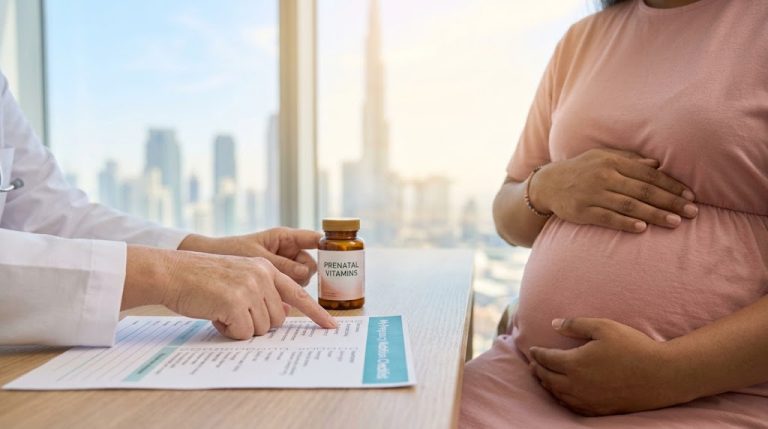
A pregnancy blood test in Dubai checks your blood for hCG, the hormone your body starts making after an embryo attaches to the uterus. It can pick up a pregnancy around 10 days after conception, according to MedlinePlus, which is earlier than most home kits manage. Dr. Zohreh Kazemi runs the test at Trusta Medical Center in Downtown Dubai and goes through your result with you afterward.
If you searched for a blood test for pregnancy near me, a blood pregnancy test near me or a pregnancy blood test near me, the clinic is in Downtown Dubai. It’s open every day from 9:30 am to 10:00 pm.
What Does a Pregnancy Blood Test Detect?
Cells in the developing placenta make hCG. Early on, the level doubles about every 48 to 72 hours, Healthline reports. A blood sample works at lower levels than a urine kit, so an hCG blood test can turn positive sooner.
One number can’t say where the pregnancy is growing or whether it’s healthy. Healthline notes that an ultrasound around six weeks tells you far more than hCG figures do. Dr. Zohreh Kazemi uses your symptoms, repeat tests and a scan when needed.
Qualitative or quantitative: which hCG test do you need?
MedlinePlus lists two types of blood test. A qualitative hCG test tells you whether the hormone is there. A quantitative test, often called a beta hCG test, tells you how much.
The number matters because doctors compare it across a few days. A single reading can look odd on its own and make sense once a second one sits beside it.
Dr. Zohreh Kazemi picks the type with you, based on your timing and history.
| Qualitative hCG test | Quantitative (beta-hCG) test | |
|---|---|---|
| What it tells you | Whether hCG is present | The exact amount of hCG |
| Result format | Positive or negative | A number, in a lab-specific unit |
| Best for | Confirming pregnancy | Tracking early pregnancy and following up concerns |
| Repeat testing | Sometimes | Often used to compare results over days |
Dr. Zohreh recommends the type that fits your symptoms, timing and history. For more detail, read MedlinePlus on the pregnancy test.
Pregnancy Blood Test or Home Urine Test
A home kit is fine for a first look. The NHS says most pregnancy tests work from the first day of a missed period, so testing earlier than that risks a result you can’t rely on.
If the line looks faint or two kits disagree, book a blood test. It also gives you a number and a doctor’s read, which a kit can’t.
| Blood test | Home urine test | |
|---|---|---|
| Sensitivity | Higher | Lower |
| Shows hCG amount | Yes (quantitative) | No |
| Done where | Clinic or laboratory | At home |
| Doctor review | Yes | No |
| Useful when | You want early or clear confirmation, or follow-up | You want a quick first check |
Most urine tests work best from the first day of a missed period, according to NHS guidance on pregnancy test timing. Very sensitive urine tests can work earlier. A blood test is useful if a home test is unclear, or if you want a doctor’s review.
How Early Can a Blood Test Detect Pregnancy?
Based on medical studies, hCG may be detected in the blood about 10 days after conception. Blood tests detect the hCG earlier than the urine pregnancy test.
The timing of your test is important. If you test early, the results can turn out negative, even though you’re pregnant. Dr. Zohreh will advise you when you should test based on when you ovulated and the length of your cycle.

When Should You Have a Pregnancy Blood Test?
You may want a pregnancy blood test if you:
- Have a missed period or early pregnancy symptoms
- Got an unclear or conflicting home test result
- Are having fertility treatment and need confirmation
- Want a doctor-led start to antenatal care
- Have had a pregnancy loss or complication before
- Have pain or bleeding in early pregnancy (see urgent symptoms below)
If you are trying to conceive, you can also read about our fertility tests.
Preparation and Procedure
How Do You Prepare?
Most hCG tests need no special preparation, and you generally do not need to fast. However, preparation may differ if you have other blood tests at the same visit.
Before you come, tell Dr. Zohreh about:
- Any fertility treatment or injections you have had
- Medicines and supplements, including biotin
- Any recent pregnancy loss or procedure
What Happens During the Test?
A nurse or doctor will then draw a small sample of blood from the vein in your arm. This takes a few minutes. You may feel a pin prick, and your arm may bruise where the blood was drawn. Severe complications are rare.
When Will You Get Your Results?
Blood draw is rapid, report has to wait for the time of the laboratory. When you scheduled the appointment, ask the clinic about the report’s time so you will inform your result, and then Dr. Zohreh discusses it with you.
Reading your pregnancy blood test results
Positive means hCG showed up. A negative can simply mean you tested too early, which is common enough that doctors often ask for a repeat a couple of days later.
If you got a number, look at the trend before the figure. On one widely used chart, the normal range at 5 weeks from your last period runs from 200 to 7,000 mIU/mL, per Healthline, which cites Australia’s Pregnancy, Birth and Baby site. That’s a 35-fold spread.
Your lab also sets its own reference range, so your pregnancy blood work results won’t line up neatly with any chart. Healthline adds that a lower-than-normal level can still go with a healthy baby.
Odd numbers do have causes worth checking. Healthline lists miscarriage and ectopic pregnancy among the reasons for low levels. High levels can come from a multiple pregnancy or a miscalculated due date.
So Dr. Zohreh Kazemi reads the number with your symptoms and, when needed, an early pregnancy ultrasound.
False results and repeat tests
A false negative usually means the test came too early. Healthline recommends repeating an hCG blood test within 48 to 72 hours to see how the level moves. Fertility drugs that contain hCG can also muddy a result, so mention any injections.
A level that rises slower than the usual doubling can point to a miscarriage or an ectopic pregnancy. It doesn’t prove either one. Only a doctor can sort that out.
Had an ectopic pregnancy or miscarriage before? You may also need high-risk pregnancy care.
When Is a Repeat hCG Test Needed?
Dr. Zohreh may advise a repeat test in these situations:
- Negative result, but you still suspect pregnancy. MedlinePlus advises repeating the qualitative test after about a week.
- A low or unexpected hCG level: Providers often retest after two to three days to see how the level changes.
- Pain, bleeding or a history of ectopic pregnancy or miscarriage: Following the trend helps her decide the next step. These cases may also need high-risk pregnancy care.
- After fertility treatment: Repeat testing helps confirm whether the pregnancy is progressing.
In many early pregnancies, hCG roughly doubles every two to three days. A level that does not rise as expected can point to a problem, such as a miscarriage or ectopic pregnancy. It does not confirm one, so a doctor’s review is essential.
Other Blood Tests in Early Pregnancy
Dr. Zohreh may recommend other tests, depending on your history and stage of pregnancy:
- hCG or beta-hCG
- Complete blood count (CBC), which helps find anaemia
- Blood group and Rh
- Infection screening
- Glucose testing, if needed
For an overview of routine tests, read the ACOG guidance on routine pregnancy tests. Dr. Zohreh explains why she recommends each test and what the result means.
Who Should Book a Pregnancy Blood Test?
- Individuals with a missed period who want confirmation
- Those with an unclear home test result
- Patients starting antenatal care
- Patients who had fertility treatment
- Patients with a history of pregnancy loss or complications
- Patients with symptoms such as pain or spotting in early pregnancy
When to See a Gynecologist Urgently
Do not wait for test results if you have:
- Severe pain in your abdomen or pelvis
- Heavy vaginal bleeding
- Dizziness or fainting
Contact the clinic or go to the nearest emergency department straight away.
Pregnancy Blood Test Cost in Dubai
The cost depends on what you need. These factors affect the fee:
- Qualitative or quantitative hCG testing
- A single test or repeat tests
- Extra blood tests, such as CBC or blood group
- The consultation and result review
- An ultrasound, if needed
Ask the clinic for a fee estimate before you book, so you know what is included.
Why Choose Dr. Zohreh Kazemi for Pregnancy Blood Tests?
Dr. Zohreh Kazemi is an obstetrician and gynecologist who sees patients at Trusta Medical Center in Downtown Dubai. Your history and symptoms decide which test you get. She then reads the result with those in mind, plus any scan.
If the test confirms a pregnancy, she can start your antenatal care and plan the next tests.
Book a Pregnancy Blood Test in Dubai
Bring your medicine list, any older test reports and your questions. Book a consultation or call +971 54 555 0770. The clinic is open Monday to Sunday, 9:30 am to 10:00 pm.
FAQs
What blood test determines pregnancy?
A blood test to determine pregnancy level measures the presence and the amount of a hormone called human Chorionic gonadotropin (hCG) in the blood.
What is a beta blood test?
A beta blood test means a blood test to measure the levels of hCG.
What kind of blood tests are done during the first trimester?
First trimester blood tests are done to measure the levels of hCG as well as complete blood count (CBC).
How long does it take to get a result of a pregnancy blood test?
The time taken to draw blood is very less. The time taken to get the results varies with respect to the workload of the laboratory.
What does a pregnancy blood test show?
A positive pregnancy blood test confirms pregnancy. In addition, it helps in determining the level of hCG. Dr. Zohreh Kazemi interprets this level in view of the pregnancy duration and other clinical findings.