

Labour Monitoring in Dubai is an essential component of maternity services that allows healthcare specialists to assess the condition of the mother, monitor the heartbeat of the baby, and evaluate the process of labour during childbirth. With the help of monitoring in labour, which occurs at various stages of childbirth, specialists can determine changes and make decisions on further care to ensure safe childbirth.
Maternity services provided by Dr. Zohreh Kazemi also include assessment and Labour Monitoring, which will depend on the status of the woman and the history of her pregnancy. In case you are planning a vaginal delivery or if you have to be under close observation because of the pregnancy risk factors, then Labour Monitoring is helpful for your doctors to determine how you and your baby are faring in each stage of labour.
Consultation with Dr. Zohreh Kazemi will help you understand about different forms of Labour Monitoring.
What Is Labour Monitoring?
The process of Labour Monitoring entails assessment of the condition of the mother and the baby at the time of delivery. This monitoring is done through observation of the heart rate of the baby, duration of the contractions, mother’s vital signs, among others. There are many types of monitoring techniques depending on the pregnancy, antenatal care and other factors.
What Does Labour Monitoring Include?
Based on the individual requirements, the monitoring comprises of:
Fetal Heart Rate Monitoring: To examine the fetal heart rate that will give information about how the baby is reacting to the process of labor.
Monitoring of Labor Progression: To check how frequent the contractions are and how long they last.
Mother’s Monitoring: To check the mother’s pulse rate, blood pressure, body temperature, and condition, if necessary.
Clinical Evaluation: To evaluate the outcome of the monitoring along with the symptoms, findings from the examination, and general condition of the mother and baby.
This helps the medical team determine if the usual care should be continued or not.
Why Is Labour Monitoring Used?
The objective of Labour Monitoring is to evaluate the well-being of the mother and her fetus during the birth process and assist healthcare practitioners in detecting any changes that need to be noted.
The process of labour places certain physical stressors on both the mother and the fetus. Labour monitoring is informative regarding the process of labour but cannot give a complete evaluation of the baby’s well-being.
Reasons for Monitoring During Labour
Indications for Labour Monitoring Include:
- Determining fetal heart rate during contractions.
- Looking at patterns in heart rates that need to be assessed.
- Measuring how often contractions happen and how long they last.
- Making sure that the woman’s wellbeing during labour is good.
- Assessment of the progress of labor.
- Guidance in making decisions for more testing and therapy if needed.
It is possible for the plan for monitoring to shift as labour goes on. The entire picture is taken into account instead of a single reading.
Benefits of Labour Monitoring
Proper monitoring allows the maternity team to keep track of any changes in the well-being of the mother and the baby during labor.
1. Evaluation of Baby’s Heart Rate
Fetal Monitoring During Labour allows the medical team to evaluate the heart rate of the baby during labor. Monitoring patterns give information regarding how the baby reacts to the contractions.
2. Monitoring Labour Process
Regular clinical assessments help the medical team monitor the progress of labor to know whether the mother and the baby need further assistance. These assessments also help the clinicians know when further evaluation is required depending on the progress of the labour process.
3. Identification of Possible Changes
Monitoring the heart rate of the baby, vital signs of the mother and uterine contractions help the clinicians identify any changes. Identification of possible changes allows further assessments to be conducted.
4. Decision Making Assistance
Results of monitoring and tests on the fetus and on the mother can assist in making a decision concerning management during childbirth. Depending on findings, doctors may continue normal monitoring, conduct more tests, or review and amend the plan of delivery.
5. Individually Childbirth Care
Methods and rate of monitoring will depend on medical history of the patient, pregnancy dangers, labour process and status of the fetus. This allows selecting a good monitoring protocol and adjustment based on change in clinical situation.
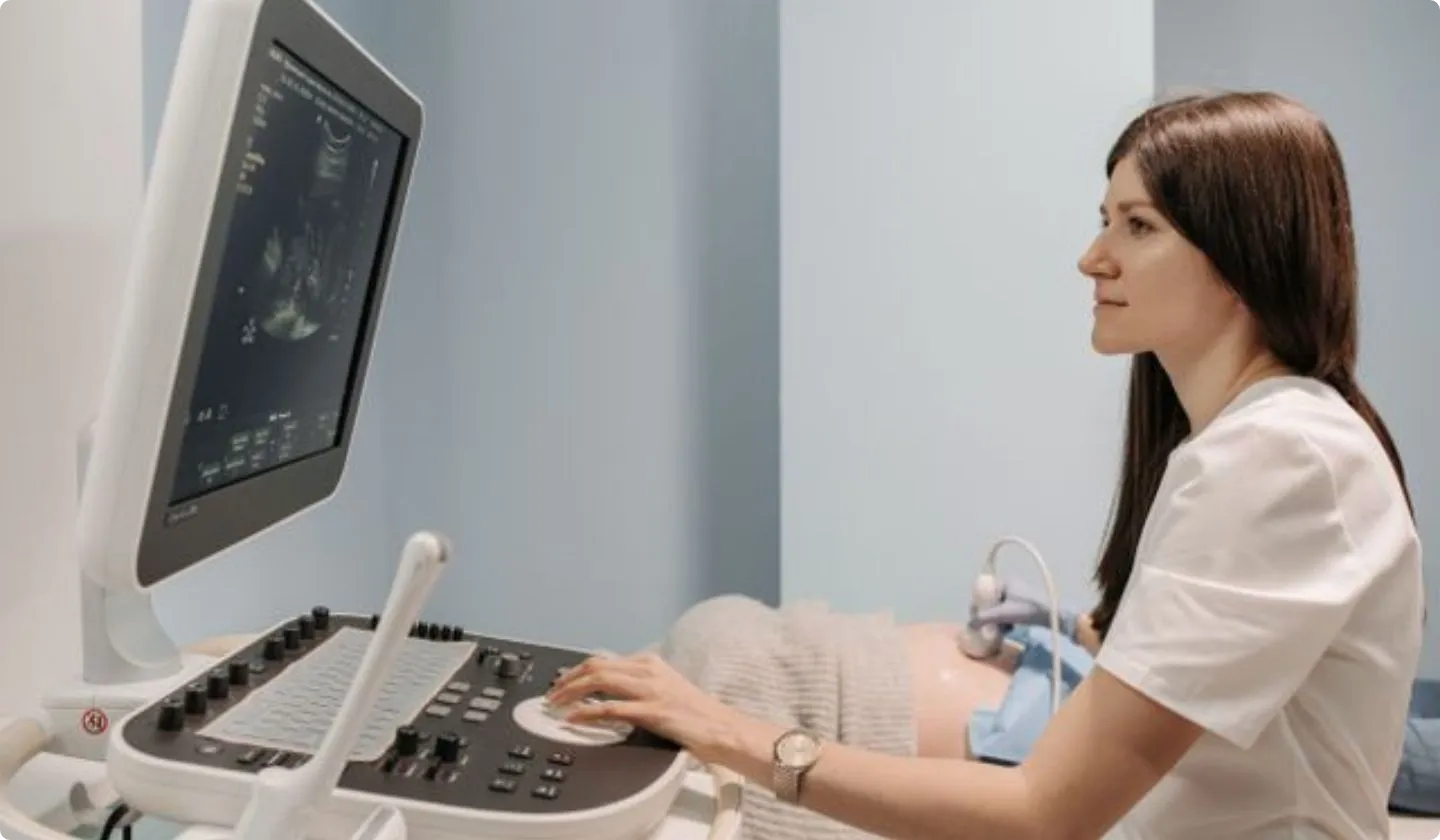
Types of Fetal Monitoring in Labour: Intermittent Auscultation vs CTG
There are different ways of monitoring during childbirth. The right approach to fetal heart rate monitoring during labour would depend on the mother’s risk factors, the baby’s condition, and the progress of labour.
Intermittent Auscultation (Fetal Heart Rate Checks)
Intermittent monitoring is where the fetal heart rate is measured at intervals using a handheld Doppler or specialized stethoscope.This form of monitoring is usually appropriate for a woman having uncomplicated, low-risk labour. It provides more freedom of movement between intervals.
CTG Monitoring During Labour (Continuous)
Continuous electronic monitoring is also known as cardiotocography (CTG). It entails continuous monitoring of the fetal heart rate and the uterine contractions.This kind of monitoring is usually recommended in the presence of particular risk factors or maternal and fetal conditions during labor.
Maternal Monitoring
During normal delivery, maternal monitoring entails measuring certain vital signs and observing symptoms throughout labour. The frequency of monitoring will depend on the mother’s condition.
Labour Progress Monitoring
Labour progress is determined by contractions, clinical examination and other observations.
How Is Labour Monitoring Performed?
The monitoring process begins with an assessment and continues throughout labour according to the care plan. The steps differ depending on the monitoring method selected.
Step 1: Initial Assessment
Dr. Zohreh Kazemi and the maternity team review relevant information, including:
- Pregnancy and medical history
- Previous deliveries or pregnancy complications
- Current symptoms and concerns
- Maternal health and vital signs
- Any known risk factors affecting the mother or baby
This assessment helps determine the appropriate monitoring approach.
Step 2: Checking the Baby’s Heart Rate
The baby’s heartbeat is assessed using a handheld Doppler or a CTG machine, depending on the clinical situation.
With continuous monitoring, sensors are usually placed on the mother’s abdomen using adjustable belts. These sensors record the baby’s heart rate and uterine contractions.
Step 3: Assessing Contractions and Labour Progress
The maternity team observes the timing, duration, and frequency of contractions. Clinical examinations are performed when indicated to assess cervical changes and the baby’s progress through the birth canal.
Step 4: Reviewing Monitoring Results
The healthcare team reviews the findings alongside the mother’s condition, symptoms, and labour progress. Changes in the baby’s heart rate or other observations are assessed to determine whether further action is required.
Step 5: Adjusting the Care Plan
If concerns arise, the team may recommend closer monitoring, changes in maternal position, additional investigations, or other appropriate measures. If the mother or baby shows signs of significant difficulty, an assisted birth or caesarean delivery might be necessary.
Who Needs Labour Monitoring?
Labour Monitoring forms part of maternity care, but the method and intensity vary according to individual circumstances. If you have a high-risk pregnancy, our high-risk pregnancy care covers how your labour will be planned and monitored
Closer or continuous monitoring is often considered when a mother or baby has factors that increase the risk of complications.
Situations That May Require Closer Monitoring
These include:
- High-risk pregnancy or relevant medical conditions
- High blood pressure or diabetes requiring medication
- Concerns about the baby’s growth or wellbeing
- Reduced fetal movements before labour
- Previous caesarean birth or certain uterine surgeries
- Fever, bleeding, or other concerning symptoms during labour
- Slow progress of labour
- Concerns about the baby’s heart rate
- Use of medicines to induce or strengthen contractions
Having one of these factors does not automatically mean a complication will occur. The maternity team assesses each situation and recommends monitoring according to clinical guidelines.
Is Labour Monitoring Safe?
Labour Monitoring is a standard part of maternity care. Intermittent monitoring with a Doppler or stethoscope is non-invasive and does not involve inserting a device into the mother’s body.
External CTG monitoring also uses sensors placed on the abdomen. These sensors record the baby’s heart rate and contractions without entering the uterus.
Internal monitoring is different and is used only in selected circumstances. It involves placing a small electrode against the baby’s scalp after the membranes have ruptured, and it requires a clinical reason.
The benefits and limitations of each method should be explained before monitoring begins. The recommended approach depends on the mother’s preferences, clinical condition, and the baby’s wellbeing.
Risks and Possible Complications of Labour Monitoring
Most routine monitoring methods have minimal physical risk. However, monitoring has limitations, and some methods have disadvantages that are important to understand.
Limitations of Intermittent Monitoring
- Brief checks may not detect every change that occurs between assessments.
- Additional monitoring may be needed if concerns arise.
- The findings must be considered alongside other clinical observations.
Limitations of Continuous CTG Monitoring
- Continuous monitoring can restrict movement, particularly when wired equipment is used.
- Some heart rate patterns are difficult to interpret and do not always indicate a problem.
- Results that are unclear or concerning may lead to additional tests or interventions that are not ultimately required.
Risks of Internal Monitoring
Internal fetal monitoring involves an invasive procedure and carries a small risk of injury or infection. It is reserved for situations in which the clinical team considers it appropriate.
Can Labour Monitoring Prevent Every Complication?
No. Labour Monitoring helps healthcare professionals assess the mother and baby, but it cannot prevent or predict every complication. Results are interpreted alongside symptoms, examination findings, and the overall clinical situation.
Labour Monitoring Cost in Dubai
The cost of Labour Monitoring depends on the type of monitoring required, the duration of observation, the maternity facility, and whether the service forms part of a broader labour and delivery package.
Factors That Affect the Cost
- Intermittent or continuous fetal monitoring
- Duration of monitoring and clinical observation
- Maternal assessment and additional tests
- The need for specialist review
- Whether monitoring is included in a maternity or delivery package
- Additional care required because of pregnancy or labour complications
Some Dubai maternity packages list fetal monitoring (CTG) as part of the delivery package, so ask what your package includes. For accurate pricing, contact the maternity service to confirm what is included and whether additional charges apply. Dr. Zohreh Kazemi’s team can explain the available care options and relevant costs before the service is arranged.
Why Choose Dr. Zohreh Kazemi for Labour Monitoring?
Labour requires careful observation, clear communication, and decisions based on the mother’s and baby’s condition. Dr. Zohreh Kazemi provides maternity care with attention to pregnancy history, labour progress, and the clinical needs that arise during childbirth.
Assessment Based on Individual Needs
The monitoring approach should reflect the mother’s health, pregnancy history, and the baby’s condition rather than applying the same method to every labour.
Clear Communication
Understanding the purpose of monitoring helps expectant mothers feel informed about their care. The monitoring method, its limitations, and any recommended changes to the birth plan should be explained clearly.
Attention to Maternal and Fetal Wellbeing
Monitoring involves more than recording the baby’s heartbeat. Maternal observations, contraction patterns, symptoms, and labour progress also contribute to clinical decisions.
Appropriate Response to Changing Conditions
If monitoring results or clinical observations raise concerns, the maternity team assesses the situation and determines whether additional investigations or changes to the delivery plan are necessary.
FAQs
What is Labour Monitoring during childbirth?
Labour Monitoring involves assessing the mother’s condition, the baby’s heartbeat, contractions, and labour progress to guide maternity care throughout childbirth.
How long does the labiaplasty procedure last?
Fetal Monitoring During Labour involves checking the baby’s heart rate using a handheld Doppler, a specialised stethoscope, or continuous electronic monitoring such as CTG.
What is the difference between intermittent monitoring and CTG?
Intermittent monitoring checks the heartbeat at intervals with a Doppler or stethoscope. CTG records the heartbeat and contractions continuously.
Is labour monitoring part of a normal delivery?
Yes. Some form of monitoring is a standard part of maternity care during normal delivery.
Does Labour Monitoring hurt?
External monitoring is generally painless. Internal monitoring involves an invasive procedure and is used only when clinically appropriate.
Does Labour Monitoring affect movement during labour?
Intermittent monitoring generally allows freedom of movement between checks. Conventional continuous CTG may restrict movement, although wireless monitoring options are available in some maternity facilities.