Month after month of negative tests wears you down. Sooner or later you’re questioning everything: your timing, your vitamins, your partner’s coffee habit, whether something is actually wrong.
I’m Dr. Zohreh Kazemi, an obstetrician and gynecologist at Trusta Medical Center in Downtown Dubai. Come in for fertility tests in Dubai and you’ll leave with something better than a guess.
Day one isn’t a shopping list of tests. I’d rather hear about your cycle, your ovulation, your past pregnancies and your general health first. After that I decide what’s worth checking, which might be a couple of blood tests and a scan, or an egg reserve check, or a semen analysis for your partner.
The aim is simple: tests that give you useful answers and nothing extra.
Areas Dr. Zohreh Kazemi Treats for Fertility tests
Most fertility delays trace back to one of a handful of common problems. Testing shows me which one is yours.
Ovulation problems
ASRM guidance says ovulation problems account for about 40% of female infertility, which is a big slice. If your cycle wanders or your ovulation kits never turn positive, I want to know whether you’re releasing an egg. If you’re not, I want to know what’s in the way.
PCOS-related fertility concerns
With PCOS, ovulation can turn up late or not at all. Blood tests and an ultrasound show your pattern. From there we work out what to try next.
Irregular periods
One month your cycle runs 25 days. The next it runs 45. Timing sex around that is close to impossible. Testing shows what’s going on and why your fertile days keep moving.
Low ovarian reserve
Fewer eggs than expected for your age can change how soon you’d want to move on to treatment. To estimate your egg supply I use an AMH blood test plus an antral follicle count, which is a scan that counts the small follicles in your ovaries.
ASRM and ACOG both note that these tests only estimate supply. A low number doesn’t mean you can’t conceive naturally.
Hormone imbalance
Thyroid trouble (overactive or underactive), high prolactin and a few other hormone problems can throw off your cycle and stop ovulation. Blood tests pick them up.
Endometriosis fertility issues
Endometriosis means tissue like the womb lining has grown outside the womb, sometimes around your tubes and ovaries. I check whether it’s getting in the way of conception.
Previous miscarriages
After one loss or several, I go through your history and suggest tests that fit. I’m hunting for anything worth fixing before you try again. Sometimes that includes genetic counseling. And if you do get pregnant, high-risk pregnancy care means someone’s watching more closely.
Unexplained infertility
You’ve tried for a year or more. The basic tests look normal. Still nothing. About 30% of infertile couples end up here. I look at what routine checks can miss and I don’t assume anything has been ruled out.
Male Fertility Factors
Low sperm count, slow swimmers and oddly shaped sperm all play a part. ASRM guidance puts the male factor at 40 to 50% of cases, so I check early.
Couples Experiencing Difficulty Conceiving
You both get checked, since the problem isn’t always on one side. It can be female factors, male factors or a mix. A couple’s assessment shows the fuller picture.

Benefits of fertility tests in Dubai
Blood tests and scans are no fun. But the results earn their keep, because they replace guessing with information.
- You find out what’s actually affecting your fertility
- A progesterone test shows whether you ovulated
- AMH and a follicle count estimate your egg supply
- A semen analysis checks your partner’s sperm
- Results show whether you need treatment and which kind
- Knowing your fertile days makes timing easier
- Testing your partner at the same time saves months of back and forth
Fertility tests for women and couples
Two people can have the same symptom yet need completely different tests. That’s why I read your history before I choose anything.
ACOG notes that you won’t get every test, since some depend on earlier results. Yours may include:
- Ovulation testing, to see whether you ovulate
- A fertility blood test for hormone levels, egg supply and thyroid function
- Egg reserve testing, using AMH and an antral follicle count
- An egg quality discussion (more on that below, because no test measures it)
- A pelvic ultrasound to look at your uterus, ovaries and follicles
- A fallopian tube test, either HSG or HyCoSy, if I suspect a blockage
- A review of your pregnancy, miscarriage, surgery and medical history
- A semen analysis for your partner
Fertility tests for women
Under 35 and a year of regular unprotected sex with no pregnancy? Time to get checked. At 35 or older, six months is enough. ACOG and ASRM guidance both back that up.
Come sooner if you’re over 40, your periods are irregular or you already know about a problem like endometriosis.
Fertility blood tests
A handful of blood tests tell me a lot about your hormones and how your ovaries are doing. AMH, FSH, LH and estradiol are the usual suspects, often with a thyroid check.
Progesterone gets its own timing: about a week before your next period (day 21 in a 28-day cycle), because that’s when it shows whether you ovulated. Test it at the wrong point in your cycle and the result can mislead.
Egg quality test
No test measures egg quality. Age is the main guide, along with how your ovaries look and work.
AMH counts eggs. It doesn’t grade them.
Ovulation testing
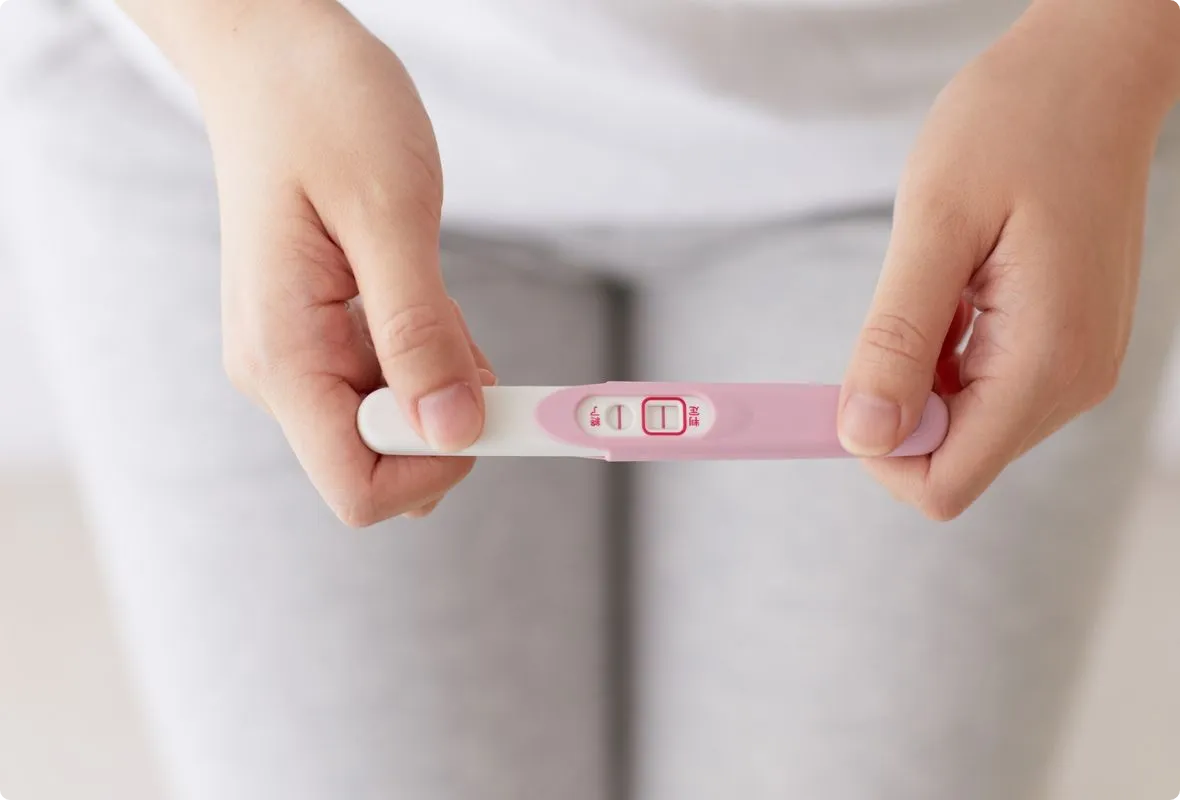
Home ovulation kits detect the LH surge, the hormone spike that tells your ovary to release an egg. ACOG says a positive kit means ovulation is likely within 24 to 48 hours.
Kits that never turn positive? Mention it at your appointment. A blood test or a scan can show what’s going on.
Fertility tests for men
Testing shouldn’t stop with the woman. For men the main check is a semen analysis, which looks at sperm count, movement and shape. One sample tells the lab plenty.
Plenty of men put it off. Don’t. A semen analysis sits alongside ovulation and tube checks as a minimum first step in ASRM guidance. It’s also one of the simplest tests in the whole workup.
I’ll give you clear instructions for the sample, including how many days to wait beforehand.
Fertility tests for couples
When pregnancy is taking longer than you hoped, testing only one of you leaves half the picture blank. So in a fertility test for couples, her assessment and the semen analysis usually happen around the same time.
I go through both histories before I order anything. Then we talk through what makes sense next, together.
How long are you fertile after a positive ovulation test?
Not long, but long enough to plan around. ACOG says a positive test points to ovulation within 24 to 48 hours. After that the egg lasts about 12 to 24 hours.
Sperm last longer, up to 5 days. That’s why your fertile window starts several days before ovulation and ends on ovulation day.
So sex on the day of the positive test and the day or two after gives you good coverage. If your cycle is hard to read, I can help you work out your timing.
What do fertility tests check?
It depends on your age, your cycle, your history and how long you’ve been trying. Most workups cover ovulation, ovarian reserve, hormones, the uterus, the tubes and sperm health. I also look at past pregnancies and at any condition or medicine that could play a part, from diabetes to long-term prescriptions.
Why choose Dr. Zohreh Kazemi for fertility testing
- Tests matched to your history, so you won’t get a full panel when one or two tests will answer the question
- A close look at ovulation, because ovulation problems cause so many delays
- Your partner in the plan from the first visit, not six months later
- Every test explained, including what the result could change
- No unnecessary tests (fewer needles, fewer bills)
- A plan once the results are in: keep trying, start treatment or look further
When should you consider fertility testing?
See a gynecologist if:
- You’ve been trying for a year (under 35) or six months (35 or older)
- Your periods are irregular or missing, which often points to an ovulation problem
- You have PCOS or endometriosis
- You’ve had one or more miscarriages and want to know why
- Ovulation feels like a mystery, with kits that never turn positive or a cycle that seems random
- You’ve had pelvic surgery or an infection that could affect your tubes or uterus
- Your partner has worries about their sperm
- IVF or ovulation medicine is already on your mind and you want the right plan first
Not trying yet? Preconception care is the place to start. A family planning visit helps you time it.
Book fertility tests in Dubai
Tests won’t solve everything at once. They will end the guessing and show you what to do next.
Ready to know what’s really going on? Book a consultation or call +971 54 555 0770. Bring your past records, a cycle calendar if you keep one and your partner if you can.
We’re open every day, 9:30 am to 10:00 pm at Trusta Medical Center in Downtown Dubai. Once you’re pregnant, antenatal care takes over. Dr. Zohreh Kazemi.
FAQs
Which fertility tests can women have?
Blood tests for AMH, FSH, LH, estradiol, thyroid and progesterone. A pelvic ultrasound shows your uterus and ovaries. A dye test shows whether your tubes are open.
What is male fertility test?
A semen analysis. Your partner gives a sample after a short period without ejaculating. I tell you how long when you book.
What is the egg quality test?
There isn’t one. Age is the main guide. AMH and an antral follicle count show how many eggs you have, not their quality.
At what point should couples think about fertility tests?
After 12 months of trying, or 6 months if the woman is 35 or older. Go sooner if her periods are irregular or either of you has a known fertility problem.
How much do fertility tests cost in Dubai?
It depends on which tests you need, since blood work, a scan and a semen analysis are priced separately. Call +971 54 555 0770 for an estimate before you book.
Where can I get fertility tests in Dubai?
I see patients at Trusta Medical Center in Downtown Dubai, open every day from 9:30 am to 10:00 pm. Call +971 54 555 0770 to book.
When should couples get tested?
After 12 months of trying, or 6 months if the woman is 35 or older. Go sooner if her periods are irregular or either of you has a known fertility problem.