Water Birth Delivery is a choice for pregnant women who wish to experiment with water-based delivery. The process includes the use of a specially designed birthing pool for labour and, in some cases, the delivery of the baby in the pool filled with warm water.
Dr. Zohreh Kazemi gives advice on maternity to assist pregnant women in learning about the water birth process, assessing their eligibility for it, as well as its advantages and disadvantages. Consultation enables pregnant women to make a birth plan according to their preferences with safety of mother and baby in mind.
Book your consultation today
What Is Water Birth Delivery?
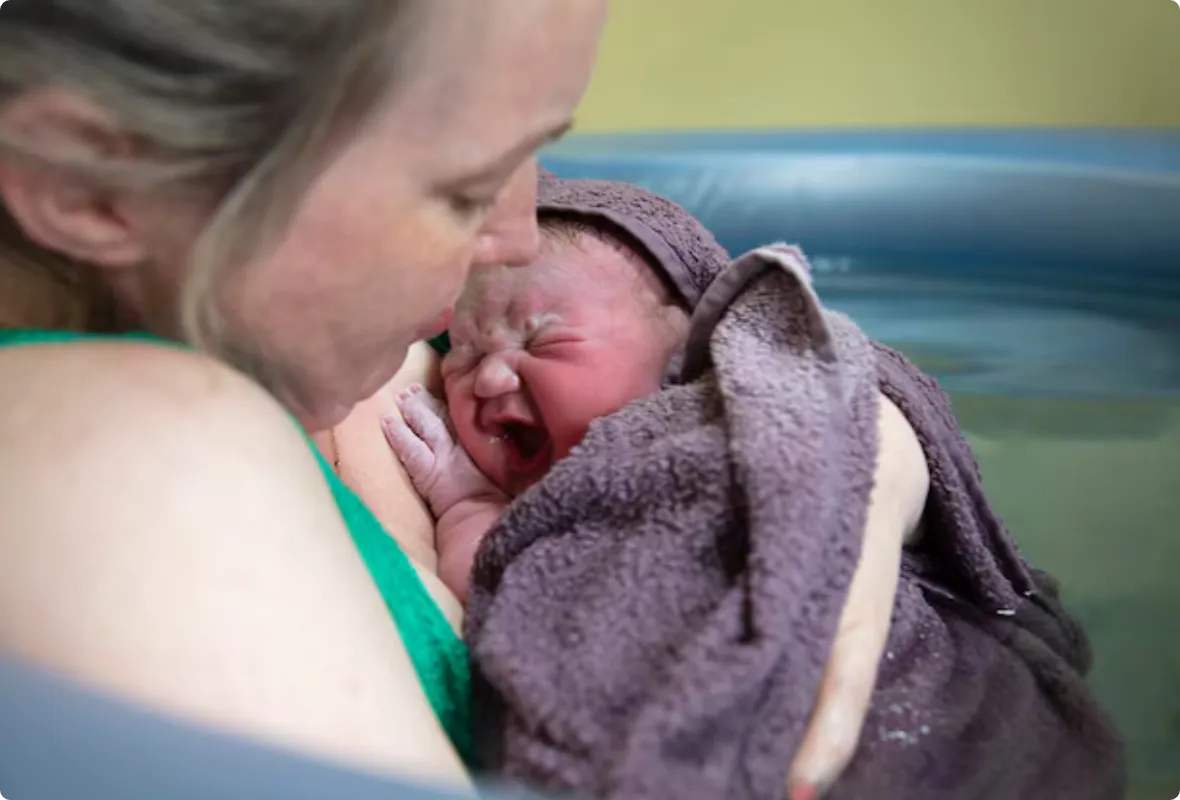
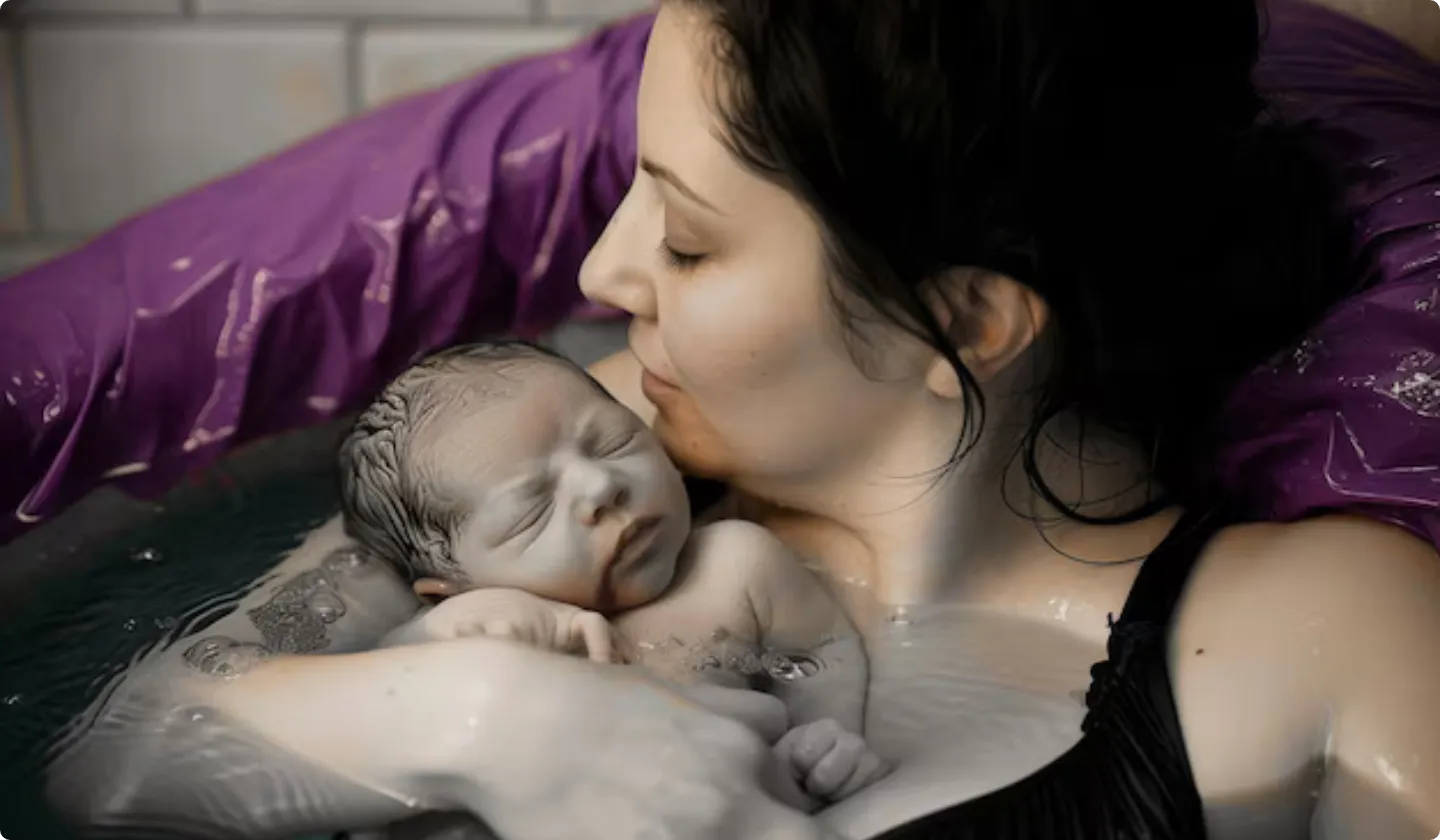
The Water Birth Delivery is one where a mother gives birth under water by being in a tub of warm water. In certain conditions, the baby is born under the water too. However, sometimes women use the water up to the point of labour but then exit the tub when delivering their babies. It all depends on a number of factors.
Warm water can be very soothing to some women and make them relax while coping with contractions. But there are other situations where water delivery is not applicable.
How Does Water Birth Work?
During waterbirth, the mother will enter into the waterbirth pool only at a point where the maternity team deems necessary. This is after considering the temperature of the water and checking the status of the mother and fetus.
She may move from one position to another within the waterbirth pool while giving birth, in an effort to assume a comfortable position. If anything arises, the maternity team will suggest that she gets out of the pool and gives birth normally.
Benefits of Water Birth Delivery
Many women prefer water birth delivery because they want a less interventionist childbirth experience, provided their medical condition makes this method suitable. Warm water and the freedom to move around may help women feel more comfortable during labour, although each woman’s experience is different.
1. Support for Relaxation During Labour
Warm water may assist in relaxation of tight muscles and alleviation of stress associated with contractions. Some ladies have found that the presence of warm water gives them a better environment as labor advances. Techniques of relaxation and constant support from the maternity staff will continue to play their part through out.
2. Improved Comfort and Mobility
Warm water is buoyant. It may enable some women to move into different positions during labor. Changing of positions helps them to get a position that is most comfortable during contractions. Movements that may be made vary depending on the pool design, progress of labor, and the physical state of the mother.
3. A More Personalised Birth Plan
With Water Birth Delivery, women who are about to give birth can discuss their choices of labor and delivery prior to giving birth. It includes the consideration of the choice of water immersion, pain relief methods, positions of birth, and situations that might necessitate changing of plan.
4. Reduced Need for Some Pain Relief Methods
Women have reported that submerging themselves in warm water assists in managing pain during childbirth and eliminates the need for some pain management measures.However, water birth does not eliminate pain completely, so women should discuss other pain management options with their healthcare provider before delivery.
Who Is Suitable for Water Birth Delivery?
The healthcare team determines whether water birth is suitable by reviewing the pregnancy history, current health, labour progress, and maternity facility guidelines. Dr. Zohreh Kazemi informs the pregnant women about various factors to consider in order to decide on the most suitable type of childbirth.
Water birth is normally recommended for carefully selected healthy women who have an uncomplicated pregnancy. The decision is not based only on the wishes of women but also on an individual assessment made by the maternity staff.
Factors Considered During Assessment
- Health of pregnancy: Whether there are any complications during the pregnancy which will not allow having water birth.
- Progress of labour: Whether the process has progressed to a stage that allows women to enter into the pool.
- Mother’s health: Whether the health status of the woman allows her to use the birthing pool.
- Child’s health: Whether the health of the child can be assessed properly.
- Facility requirements: Whether trained staff, suitable equipment, and emergency arrangements are available.
When May Water Birth Not Be Recommended?
Water birth may not be appropriate if there are any complications during pregnancy or childbirth that require monitoring and intervention by medical practitioners. Cases such as infections on the mother, heavy blood loss, any problems with the well-being of the baby, premature labour among others, would exclude one from undergoing water birth. The maternity team determines whether water birth is suitable and when the mother needs to leave the pool.
How Is Water Birth Delivery Performed?
The process begins with pre-birth consultations to discuss the mother’s preferences, general health, and arrangements for water birth at the maternity hospital. Dr. Zohreh Kazemi guides pregnant women through these consultations and explains what they can expect.
Step 1: Antenatal Consultation
During the consultation process, the mother talks about her past pregnancies, illnesses, prior deliveries, and preferred mode of delivery. The health team gives her information about the eligibility criteria for water birth, options of pain relief and reasons why other delivery plan may be necessary.
Step 2: Preparation of Birthing Pool
If the maternity team considers water birth suitable, they prepare the birthing pool, ensure it is clean, and maintain the appropriate water temperature.
Step 3: Entering the Water during Labour
The mother enters the birthing pool when she is advised by the maternity team that the time is right. While monitoring her state and the baby’s wellbeing as per the clinical guidelines, the maternity team supports the mother in adopting comfortable positions in the water.
Step 4: Delivery and Post-birth Care
In case the mother is still eligible for water birth and the delivery is considered safe, the process of delivering takes place as per the protocol of the institution. The midwife or the doctor gently brings the baby to the surface and out of the water and then carries out the assessment of the baby and mother’s state.
Water Birth vs Normal Delivery
Water birth and conventional vaginal delivery both involve vaginal childbirth, but the birth environment and use of water differ. Water birth takes place in a specially designed pool, while conventional vaginal delivery generally takes place on a bed or other delivery surface.
Feature | Water Birth Delivery | Conventional Vaginal Delivery |
Birth environment | Specially prepared pool of warm water | Delivery bed or other suitable surface |
Maternal movement | Buoyancy may help with position changes | Position options depend on the setting and clinical circumstances |
Pain management | Warm water may help with comfort | A range of medical and non-medical options is available |
Suitability | Requires specific eligibility checks and facility arrangements | Depends on the mother’s and baby’s clinical circumstances |
Change of plan | Leaving the pool may be necessary if concerns arise | Care may also change if medical intervention becomes necessary |
Neither approach is suitable for every pregnancy. The decision should be based on individual assessment, informed preferences, and the maternity team’s advice.Learn more about normal delivery to understand the conventional vaginal birth process and the care involved during childbirth.
Possible Risks and Side Effects of Water Birth Delivery
Water birth carries certain risks that the healthcare team should discuss with the mother before she chooses this delivery method. If the team does not carefully regulate the water temperature, excessively hot water may pose risks to the mother. the risk of infections if there is not proper hygiene in the pool; and the difficulty of having access to other interventions if something unexpected occurs.
For the baby, there are risks such as breathing problems because of water inhalation, risks of infections, and possible risks because of the birth process itself. It is not a completely risk-free process as serious complications can occur although these are uncommon.
How Are Risks Managed?
Risk Management begins with choosing suitable women and adhering to the maternity institution’s protocol of water births. There is also an NICE evidence summary of benefits and harms associated with water births, which you can check out to know more about the evidence.
The water temperature, hygiene measures, mother and child wellbeing are all taken care of. If the mother shows any worrisome signs, if there are changes in the baby’s condition or if labor calls for some intervention, the team might ask you to leave the birthing pool.
How to Prepare for Water Birth Delivery
Proper preparation assists pregnant women in knowing what to expect and arranging matters before going into labor. Antenatal visits provide a chance to enquire and establish whether the maternity center where one is registered for water birth practice is eligible.
Things to put into consideration prior to delivery include:
- Establishing the eligibility of the maternity center for water births.
- Asking about the guidelines and policies of the maternity center regarding water births.
- Knowing other forms of pain management techniques.
- Learning the situations where it might be necessary to leave the pool.
- Knowing how monitoring will be done.
Cost of Water Birth Delivery
The cost of water birth delivery is dependent on various factors such as the maternity hospital, delivery package, availability of the pool, staffing, and other issues. Some of the maternity hospital packages come with water birth facilities, while others have charges for some specific things.It is necessary to inquire whether the antenatal consultations, use of birthing pool, delivery, and monitoring services come along with the package or not.
Why Choose Dr. Zohreh Kazemi for Maternity Guidance?
Dr. Zohreh Kazemi assists expecting mothers by giving them insights about their choice of maternity and how to go about their childbirth. When it comes to Water Birth Delivery, it is recommended that a consultation will provide a chance to look at the eligibility, benefits and risks of water births and ask questions to the maternity staff.
This involves looking at situations on an individual level and not the other way round, where the assumption is that all pregnant mothers need to give birth in one particular way.
Book a Water Birth Delivery Consultation
The selection of the birthing method begins by having knowledge of the different choices that are available and determining the best fit for every pregnancy. Dr. Zohreh Kazemi will assist pregnant women with the discussion of their preferred mode of birth, educate them on the concept of water immersion in labor, and provide information regarding Water Birth Delivery. Make a booking for a maternity consultation with Dr. Zohreh Kazemi.
FAQs
What is Water Birth Delivery?
It is a form of childbirth whereby a woman gives birth in a specially prepared pool filled with warm water under specific situations. Some pregnant women opt to give birth while in warm water although exit from the pool occurs before childbirth.
Is water birth appropriate for all pregnant women?
It lasts for a different amount of time depending on the technique and amount of reshaped tissue. Dr. Zohreh Kazemi informs patients of this duration during consultations.
Can water births decrease labour pain?
Warm water may assist women to relax and deal with labour pains, although there is no guarantee of a painless labour process.
What are the possible risks associated with having a water birth?
Some possible risks include infections, hyperthermia, delay in receiving medical attention and some rare complications that can occur with the baby. Screening and monitoring will help minimize these risks.
Is it possible to leave the pool during the labor process?
Yes, it is recommended to leave the pool whenever there is need for increased monitoring and when receiving any kind of medical treatment. The birth plan should be kept flexible throughout the entire process of delivering.